
Triyuginarayan Temple Wedding is one of the most fascinating spiritual wedding experiences in Uttarakhand, especially for couples who want their marriage ceremony to be connected with Hindu mythology, Himalayan traditions and the sacred story of Lord Shiva and Goddess Parvati. Located in the Rudraprayag region of Uttarakhand, Triyuginarayan is traditionally believed to be the place where Shiva and Parvati were married in the presence of Lord Vishnu, Lord Brahma, gods and sages.
Unlike a conventional destination wedding, a wedding at this ancient Himalayan temple carries a distinctly spiritual character. The temple courtyard has an Akhand Dhuni, or sacred eternal fire, which according to Hindu belief is associated with the divine marriage of Shiva and Parvati. Couples visiting the temple often seek blessings for a peaceful, harmonious and long-lasting married life.
The surrounding mountains, traditional stone architecture and quiet village atmosphere add another dimension to the experience. For couples who prefer a meaningful religious ceremony over a large commercial wedding setup, Triyuginarayan offers a very different kind of destination.
Why Is Triyuginarayan Famous for Weddings?
The primary reason is its connection with one of the most celebrated divine marriages in Hindu tradition. According to the traditional account, Lord Shiva and Goddess Parvati were married at this sacred location. Lord Vishnu is believed to have participated in the ceremony as Parvati’s brother, while Lord Brahma is traditionally regarded as the priest who officiated the wedding.
This story gives Triyuginarayan an extraordinary significance for couples. Instead of simply choosing a beautiful mountain destination, couples can perform wedding rituals at a location that is traditionally associated with the union of Shiva and Shakti.
The spiritual atmosphere is further enhanced by the sacred fire in the temple courtyard. Incredible India describes this perpetual fire as the Akhand Dhuni and connects it with the divine marriage. The same source also identifies Brahma Shila, the sacred stone associated with the wedding site. :contentReference[oaicite:1]{index=1}
For many devotees, the significance is not about luxury or decoration. It is about beginning married life in a place associated with devotion, faith and an eternal divine relationship.
The Story of Shiva and Parvati’s Divine Wedding
The story begins with Goddess Parvati, who according to Hindu tradition was born as the daughter of Himavan, the personification of the Himalayas. She was regarded as the reincarnation of Sati, Shiva’s earlier consort.
After Sati’s departure, Lord Shiva withdrew deeply into meditation. Parvati’s devotion toward Shiva eventually led her to undertake intense spiritual practices. Her dedication and determination are central parts of the traditional story of their eventual union.
After Shiva accepted Parvati, the divine wedding was arranged. The ceremony is traditionally believed to have taken place at Triyuginarayan.
In this sacred narrative, Lord Vishnu played an important role in the wedding ceremony. He is traditionally believed to have acted as Parvati’s brother and participated in the kanyadaan. Lord Brahma is associated with the role of the priest.
The marriage was not considered an ordinary union. It represented the coming together of Shiva and Shakti — two powerful principles within Hindu philosophy. This is one reason why the location continues to hold such importance for couples seeking blessings for their married life.
The Meaning Behind the Name Triyuginarayan
The name Triyuginarayan has a deep religious meaning. It is generally understood through the words associated with Tri, Yugi and Narayan.
“Tri” refers to three, while “Yugi” relates to yugas or cosmic ages. “Narayan” is another name for Lord Vishnu. The name therefore reflects the temple’s association with Narayan and the traditional belief that the sacred wedding and its fire have remained significant across the ages.
This connection with three yugas is also reflected in the identity of the temple and the village. It is one of the reasons the shrine has become popularly associated with the idea of an eternal or timeless wedding.
The Akhand Dhuni: The Sacred Wedding Fire
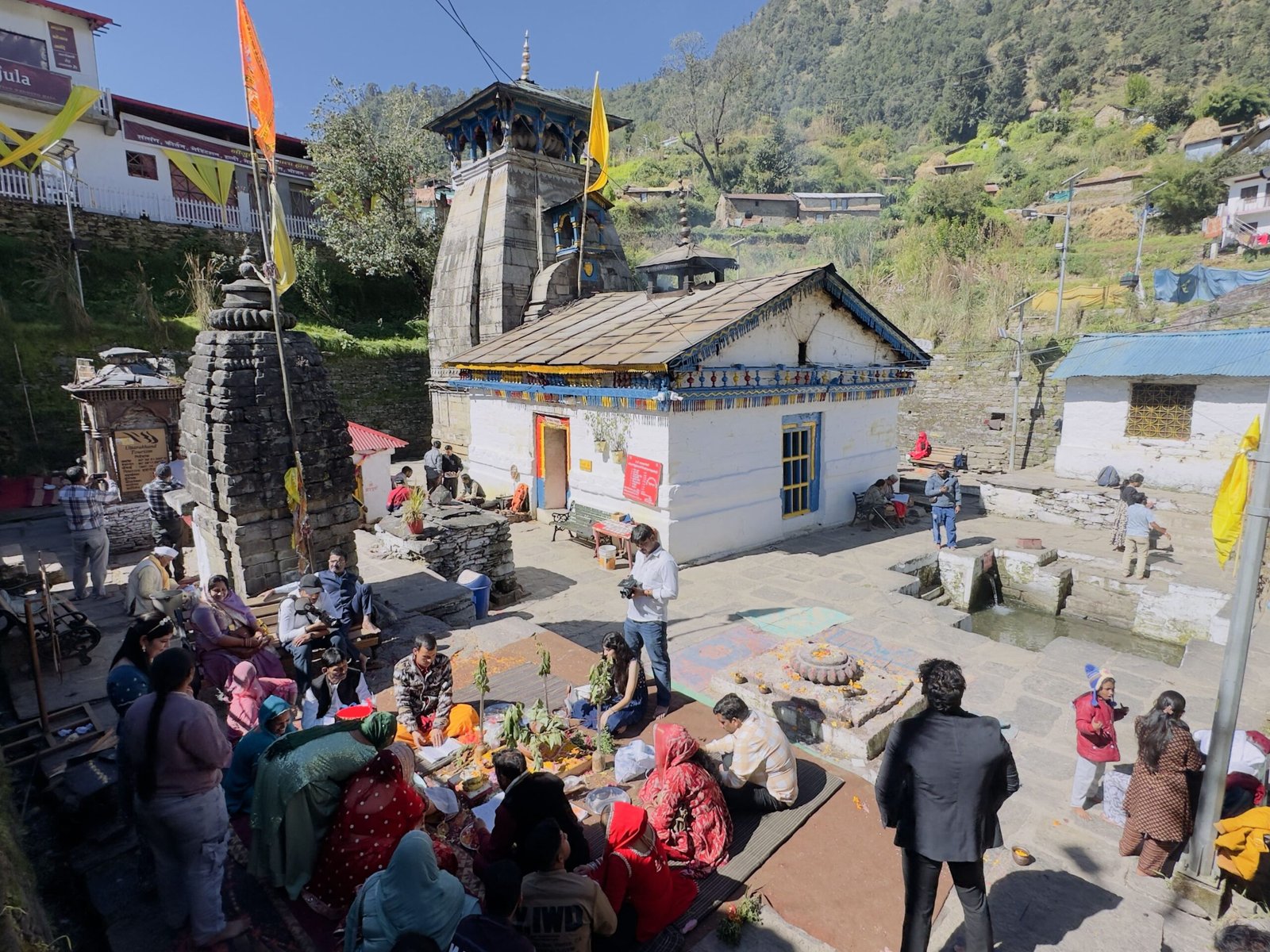
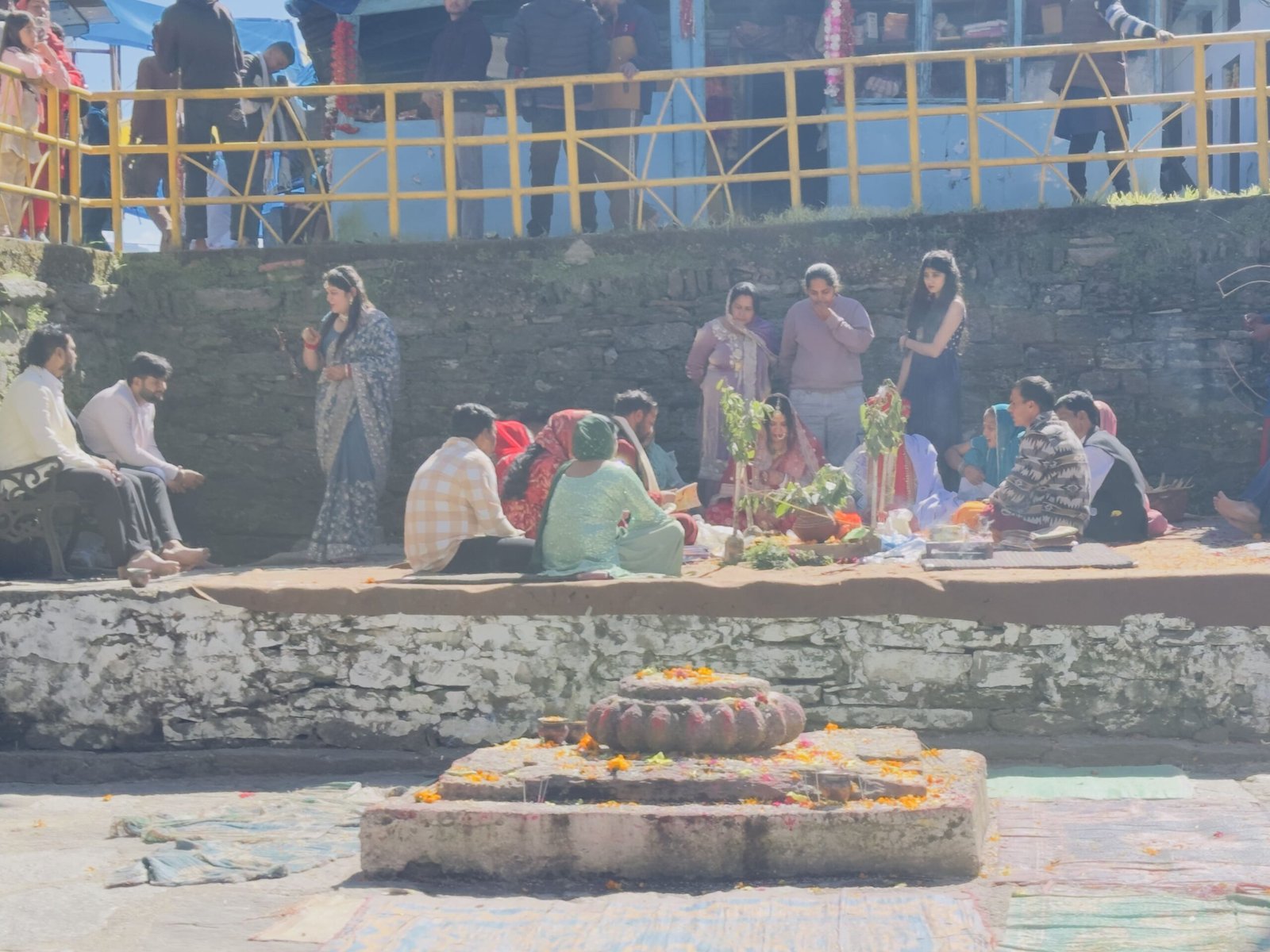
The Akhand Dhuni is perhaps the most recognisable spiritual feature of Triyuginarayan Temple. It is a sacred fire located in the temple courtyard and is traditionally believed to have witnessed the wedding of Shiva and Parvati.
Fire has an important role in Hindu wedding rituals. During a traditional Hindu marriage, the sacred fire is treated as a witness to the vows taken by the bride and groom. At Triyuginarayan, this symbolism becomes particularly powerful because the location itself is traditionally connected with Shiva and Parvati’s wedding.
Devotees approach the fire with respect and devotion. Traditional belief also gives importance to the sacred ashes associated with the flame.
What Makes a Wedding at Triyuginarayan Special?
A wedding here is fundamentally different from a typical destination wedding in a resort or hotel. The emphasis is on spirituality, traditional rituals and the sacred surroundings rather than entertainment and large-scale luxury arrangements.
The mountain setting creates a naturally peaceful environment. The sound of temple bells, the surrounding Himalayan landscape and the traditional stone temple architecture create an atmosphere that many couples find deeply meaningful.
For couples who have a strong spiritual connection with Lord Shiva and Goddess Parvati, the location has an additional emotional significance. Beginning married life at a site traditionally associated with their divine union can make the wedding feel personal and symbolic.
Triyuginarayan Temple Wedding Rituals
The exact wedding ceremony and rituals can vary according to family traditions, priestly guidance and applicable temple arrangements. Couples planning a wedding should discuss the complete ceremony with the local priest or authorised wedding coordinator well in advance.
A traditional Hindu wedding may include rituals such as Ganesh puja, sankalp, kanyadaan, pheras around the sacred fire, sindoor and other family-specific customs.
At a sacred temple such as Triyuginarayan, the spiritual setting is more important than creating a highly elaborate stage. Couples should therefore plan decorations and arrangements in a way that respects the temple’s character.
Typical Elements Couples May Plan
- Traditional Hindu wedding rituals.
- Guidance from a local priest.
- Marriage registration requirements.
- Traditional wedding attire.
- Family accommodation.
- Local transportation.
- Photography and videography, subject to permissions.
- Food arrangements for guests.
- Basic floral decoration where permitted.
- Return transportation after the ceremony.
Who Should Choose Triyuginarayan for a Wedding?
Triyuginarayan is especially suitable for couples who want a spiritual and intimate wedding. It can work particularly well for families who prefer a smaller gathering rather than a large destination wedding with hundreds of guests.
It is also attractive to couples who already have a connection with Uttarakhand, Kedarnath or the Shiva-Parvati tradition.
However, couples should understand that this is a Himalayan destination. It does not provide the same convenience as a city hotel or luxury resort. Travel takes longer, weather can change quickly and accommodation options around remote mountain areas may be more limited.
Best Time for a Triyuginarayan Wedding
The best wedding dates depend on several factors, including weather, road conditions, family convenience, religious calendar and the availability of local arrangements.
Spring and post-monsoon periods are often attractive for mountain travel because the weather can be more comfortable than during peak winter. Summer can also be suitable, but popular travel periods may increase demand for hotels and transportation.
Monsoon requires additional caution. Rain can affect mountain roads and travel times. Couples planning a wedding during the rainy season should maintain sufficient flexibility in their itinerary.
Winter can bring significantly colder conditions in the Himalayan region. Couples considering an off-season ceremony should be prepared for cold weather and confirm accessibility before finalising arrangements.
How to Reach Triyuginarayan Temple
Triyuginarayan is located in the Rudraprayag region of Uttarakhand, within the broader Kedarnath pilgrimage landscape. Because it is a Himalayan destination, the journey involves mountain roads rather than a direct city-style commute.
Most travellers approach the region through major Uttarakhand gateways such as Haridwar or Rishikesh and continue towards the Garhwal Himalayas by road.
Couples travelling from Delhi and other parts of India can first reach Haridwar, Rishikesh or Dehradun depending on their transportation plan. From there, a private vehicle can be arranged for the mountain journey.
The final road approach should always be confirmed locally because mountain road conditions and traffic restrictions can change according to weather and season.
Triyuginarayan and Kedarnath: Can You Combine Both?
Yes, many travellers associate Triyuginarayan with the Kedarnath pilgrimage because both destinations are located within the same broader Himalayan pilgrimage region.
A couple planning a wedding can therefore consider adding Kedarnath darshan, Guptkashi, Sonprayag or other nearby spiritual destinations to their Uttarakhand itinerary, depending on the group’s physical comfort and available time.
However, a wedding itinerary should not be made unnecessarily hectic. Elderly family members and guests may need additional rest, especially when travelling to high-altitude locations.
Triyuginarayan Wedding for Families
A family wedding at Triyuginarayan can be beautiful, but logistics should be planned carefully. Unlike an urban destination wedding, everyone cannot simply arrive at the venue within a few minutes.
Accommodation should ideally be arranged according to the number and age of guests. Senior citizens may need rooms with easier access, while families travelling with children should have comfortable meal and rest arrangements.
Transportation is equally important. A private vehicle gives the family more flexibility and allows additional stops when required.
For Senior Citizens
- Plan shorter travel days where possible.
- Keep regular rest breaks.
- Carry prescribed medicines.
- Choose accommodation carefully.
- Avoid unnecessary high-altitude travel immediately before the wedding.
For Children
- Carry warm clothing even during warmer months.
- Keep snacks and drinking water available.
- Avoid overly long travel days.
- Maintain flexibility around meal and rest times.
Smiley Holidayz
Your Trusted Travel Partner in Uttarakhand
Make your special day truly unforgettable with Smiley Holidayz. From a sacred Triyuginarayan Temple wedding to beautiful Himalayan destination weddings, we help you plan travel, hotels, transportation, and local arrangements with trusted support.
Things to Check Before Booking a Wedding
Before confirming your wedding, speak with the temple authorities or a trusted local wedding coordinator about the current rules and availability. Religious places can have specific requirements regarding ceremonies, photography, decorations and timings.
Do not assume that every service available at a hotel wedding is automatically available at a temple. Confirm each arrangement separately.
- Temple permission and ceremony availability.
- Priest availability.
- Wedding ritual requirements.
- Guest accommodation.
- Transportation.
- Photography permission.
- Decoration permissions.
- Food and catering arrangements.
- Marriage registration documentation.
- Weather and road conditions.
Photography at Triyuginarayan Temple
The Himalayan surroundings make the destination naturally attractive for wedding photography. Couples can capture traditional portraits against mountain landscapes, stone architecture and the peaceful village environment.
However, photography inside or around a religious site should always respect temple rules. The sacred fire and worship areas should be treated with appropriate reverence.
A good photography plan does not require turning the temple into a commercial photo studio. The natural environment itself provides a beautiful background.
Why Couples Choose a Sacred Wedding Over a Luxury Wedding
A luxury wedding focuses heavily on venue design, hospitality, entertainment and elaborate celebrations. A sacred wedding focuses more on rituals, family participation and spiritual meaning.
Neither approach is better for everyone. The right choice depends on what the couple wants from the wedding.
For couples who believe that marriage is a spiritual commitment, a sacred Himalayan temple can offer a powerful beginning. The simplicity of the surroundings can also make the ceremony feel more personal.
Triyuginarayan represents this idea particularly well because its identity is directly connected with the traditional story of Shiva and Parvati.
Triyuginarayan Wedding: A Meaningful Start to Married Life
Triyuginarayan Temple Wedding is more than a destination wedding concept. It is an experience built around mythology, devotion, family and the natural beauty of Uttarakhand.
The temple’s association with the divine marriage of Shiva and Parvati gives the location a unique identity. The Akhand Dhuni, Brahma Shila, traditional temple architecture and Himalayan surroundings create an atmosphere that cannot easily be replicated at a conventional wedding venue.
For couples planning to marry here, preparation is the key to a comfortable experience. The destination is remote compared with major cities, so transportation, accommodation, weather and guest requirements should be planned carefully.
If you are looking for a wedding that combines spirituality with the beauty of the Himalayas, Triyuginarayan deserves serious consideration. The most important part is not how elaborate the celebration becomes, but how meaningful the ceremony feels to the couple and their families.
Frequently Asked Questions
Why is Triyuginarayan famous for weddings?
Triyuginarayan is traditionally believed to be the place where Lord Shiva and Goddess Parvati were married. The temple’s sacred fire, known as the Akhand Dhuni, is closely associated with this divine wedding.
Can couples get married at Triyuginarayan Temple?
Couples may be able to conduct religious wedding ceremonies subject to the applicable temple arrangements, permissions and priest availability. These details should be confirmed before making travel plans.
What is the Akhand Dhuni at Triyuginarayan?
The Akhand Dhuni is the sacred fire located in the temple courtyard. Hindu tradition associates the fire with the divine marriage of Lord Shiva and Goddess Parvati.
Where is Triyuginarayan Temple located?
Triyuginarayan Temple is located in the Rudraprayag region of Uttarakhand, in the Garhwal Himalayas and within the wider Kedarnath pilgrimage landscape.
Is Triyuginarayan suitable for a destination wedding?
It can be suitable for couples looking for a spiritual and intimate destination wedding. Because it is a Himalayan location, transportation, accommodation, weather and guest comfort require careful planning.
What is the best time for a Triyuginarayan wedding?
Spring, summer and post-monsoon periods can be considered depending on weather, road conditions and temple arrangements. Couples should confirm current local conditions before finalising dates.
Can Triyuginarayan be combined with Kedarnath?
Yes. The two destinations are part of the same broader Himalayan pilgrimage region, and travellers often plan them together. The itinerary should account for travel time and the physical needs of the group.
Is photography allowed at the temple?
Photography rules can vary according to the area and current temple instructions. Couples should confirm permissions before planning professional wedding photography.