
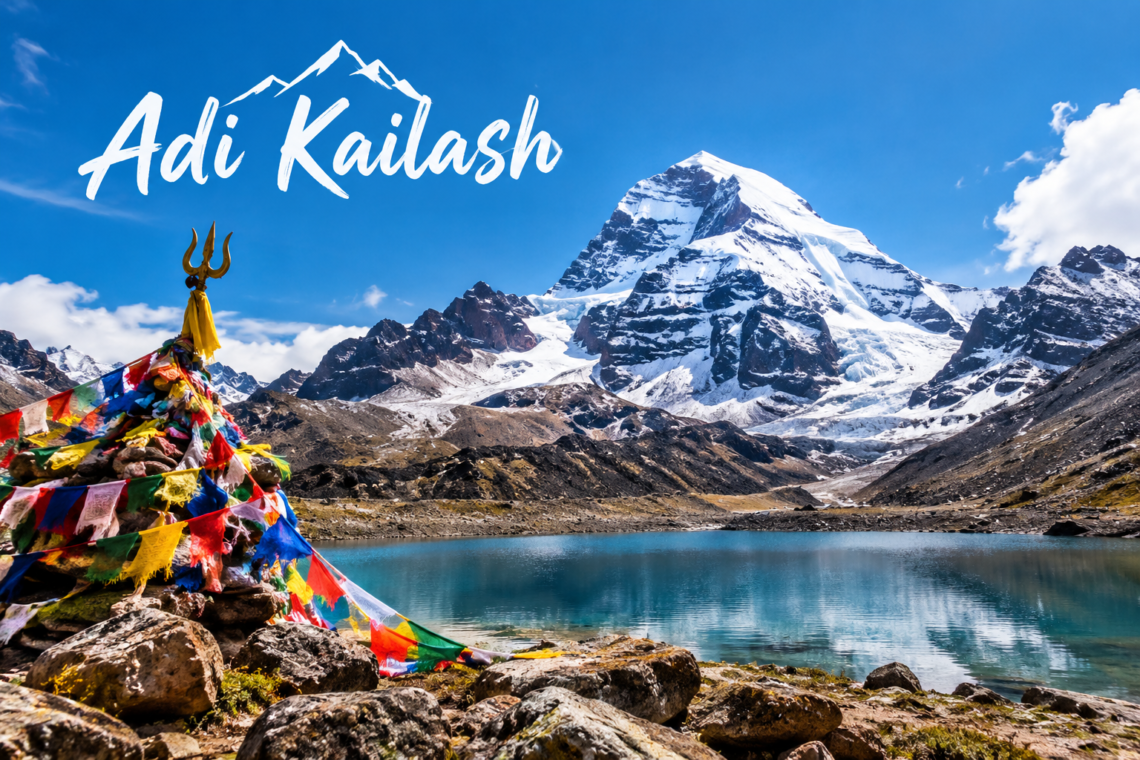
Adi Kailash is one of the most spiritually significant Himalayan destinations in Uttarakhand, attracting devotees of Lord Shiva, nature lovers and travellers seeking a peaceful journey through the remote Kumaon region. Located in Pithoragarh district near the Indo-Tibetan border, this sacred mountain is often called Chhota Kailash because of its resemblance to Mount Kailash in Tibet. Surrounded by dramatic Himalayan peaks, traditional villages, rivers and high-altitude landscapes, it offers a distinctive combination of pilgrimage, cultural experiences and mountain adventure.
The journey usually takes travellers through Pithoragarh, Dharchula, Gunji and the remote Vyas Valley. Important attractions include the sacred Parvati Sarovar near Jolingkong and the separate Om Parvat viewpoint near Nabhidhang. The route passes through sensitive border areas, so permits, local instructions, road conditions and seasonal accessibility must be checked before departure.
Whether you are planning a family pilgrimage, a private road trip or a group departure, this guide explains the major attractions, travel route, package options, accommodation, best season and practical preparation required for a comfortable Himalayan journey.
Overview of Adi Kailash
Adi Kailash is a sacred mountain in the Kumaon Himalayas of Uttarakhand. Its religious importance is associated with Lord Shiva and Goddess Parvati, while its natural setting includes high mountain ridges, glacial landscapes and the beautiful Parvati Sarovar.
The destination is especially appealing to pilgrims who want a spiritually meaningful Himalayan experience without undertaking the much longer international journey to Mount Kailash in Tibet. However, it remains a remote, high-altitude destination rather than a conventional sightseeing holiday. Travel times can change with road conditions, weather, security checks and local restrictions.
- Location: Pithoragarh district, Uttarakhand
- Region: Kumaon Himalayas and Vyas Valley
- Major base town: Dharchula
- Important stops: Gunji, Jolingkong, Parvati Sarovar and Nabhidhang
- Travel style: Road journey with short walks and possible trekking, depending on access
- Typical travel season: Generally May to October, subject to official permissions and local conditions
Religious Significance of the Sacred Mountain
For devotees of Lord Shiva, the mountain represents a sacred Himalayan landscape associated with meditation, spirituality and the divine abode of Shiva and Parvati. Its resemblance to Mount Kailash has given it a special place in the religious imagination of many pilgrims.
The surrounding region is also home to traditional Himalayan communities whose lives are closely connected with mountain agriculture, seasonal travel and the challenging environment of the border valleys. Visiting respectfully means following local customs, listening to guides and officials, and avoiding disturbance to religious sites or fragile natural areas.
The journey is not only about reaching a viewpoint. The changing landscape, quiet villages, mountain rivers and long road journey all contribute to the experience.
Adi Kailash and Om Parvat: What Is the Difference?
Adi Kailash and Om Parvat are often mentioned together in travel packages, but they are separate mountains and are viewed from different locations.
Adi Kailash and Parvati Sarovar
Adi Kailash is associated with the Jolingkong area of Vyas Valley. Parvati Sarovar, also called Parvati Tal or Parvati Kund in some travel descriptions, is the sacred lake near the mountain. The reflection of the surrounding peaks in the water can create a beautiful scene when visibility and weather conditions are favourable.
Om Parvat and Nabhidhang
Om Parvat is famous for a natural snow pattern that resembles the sacred symbol “ॐ” on its mountain face. The formation is viewed from the Nabhidhang area when weather and visibility permit. Cloud, fresh snowfall, sunlight and seasonal conditions can affect how clearly the pattern can be seen.
Although many itineraries combine both destinations, visiting one does not automatically mean that the other has been covered. Check that your selected itinerary specifically includes both viewpoints, if that is your preference.
Top Places to Visit During the Journey
1. Dharchula
Dharchula is an important town on the Kali River and a major gateway for journeys into the high Himalayan border region. Travellers generally use it for transport coordination, supplies and completion of relevant local formalities. It is a useful place to confirm the latest road situation before continuing towards the upper valleys.
2. Gunji Village
Gunji is an important settlement and staging point for journeys towards Adi Kailash and Om Parvat. The village is surrounded by rugged mountains and offers a glimpse of life in a remote Himalayan region. Because it is at high altitude, travellers should allow time to rest and adjust rather than immediately undertaking strenuous activity.
3. Jolingkong
Jolingkong is the key area for visiting Adi Kailash and Parvati Sarovar. The mountain scenery can be spectacular, but conditions may be cold even during the usual travel season. Access and the distance that vehicles can cover may vary, so follow the day’s instructions from the local team.
4. Parvati Sarovar
Parvati Sarovar is a sacred lake near the foot of Adi Kailash and is one of the spiritual highlights of the journey. Pilgrims often pause here for prayer, reflection and views of the surrounding peaks. Visitors should respect religious practices and avoid leaving offerings, plastic or other waste that could harm the environment.
5. Nabhidhang Viewpoint
Nabhidhang is known as the viewing area for Om Parvat. On a clear day, the distinctive snow pattern on the mountain may be visible. The journey is weather-dependent, so it is important to remain flexible and understand that a clear view cannot be guaranteed on every departure.
Best Time to Visit
The usual travel window is from late spring through early autumn, but the actual opening and closing dates depend on weather, road access and permissions. May and June can offer snow-covered scenery, while September and early October may provide clearer post-monsoon views.
| Period | What to Expect | Planning Advice |
|---|---|---|
| May–June | Cold mornings, snow on higher peaks and the start of the travel season | Carry warm layers and confirm that the route is open |
| July–August | Monsoon rain, possible landslides, road delays and reduced visibility | Travel only after checking current local advice and conditions |
| September | Often improved visibility after the monsoon, though weather remains changeable | Keep flexible dates and check road status before departure |
| October | Colder nights and the possibility of early winter conditions at higher elevations | Confirm seasonal access and pack suitable winter clothing |
| November–April | High-altitude access may be restricted or closed by snow and winter conditions | Do not assume the route is open; obtain current official confirmation |
Weather in the Himalayas can change rapidly, and general seasonal guidance should not be treated as a guarantee of access. Confirm current conditions shortly before travel.
How to Reach Adi Kailash
By Road
The journey generally proceeds through Pithoragarh and Dharchula before continuing into the upper valleys. The road beyond Dharchula passes through remote and mountainous terrain, where driving times can vary considerably. Road repairs, landslides, weather, security checks and local restrictions may affect the route.
Travellers should avoid planning tight connections or assuming that every section can be completed in a fixed number of hours. A buffer day is helpful, particularly for groups travelling with senior citizens or children.
By Train
Kathgodam and Tanakpur are commonly considered rail access points for journeys into Kumaon. From either station, travellers need onward road transportation towards Pithoragarh and Dharchula. The most suitable railhead depends on train availability, the itinerary and the transport arrangements confirmed for the trip.
By Air
Travellers may consider flights to an airport serving the wider Kumaon or Uttarakhand region, subject to current flight schedules. The onward journey still involves substantial road travel. Before booking flights, confirm the transfer plan, realistic driving times and buffer required for mountain travel.
Permits and Important Travel Formalities
The Adi Kailash and Om Parvat region lies close to the international border, and access is subject to applicable security procedures and local permissions. An Inner Line Permit or other required authorisation may be necessary for the route, depending on the current rules and the area being visited.
Before travelling, ask your tour operator to confirm the current permit process with the relevant authorities. Do not rely solely on an old online checklist because requirements, document formats and checkpoints can change.
Keep the following ready where required:
- Valid government-issued photo identification
- Recent photographs or digital copies if requested for the permit process
- Accurate traveller details matching the identification documents
- Confirmed accommodation and transport details, where required
- Copies of permits and bookings for use at checkpoints
- Emergency contact information and essential personal medicines
Follow instructions from local administration, police, border personnel and your authorised guide. Access to specific viewpoints may be restricted temporarily even if the broader itinerary is operating.
Types of Adi Kailash Tour Packages
Package names and inclusions vary between operators. The following are useful formats to compare when planning a trip; they are not official fixed-duration government packages. The actual number of days should be confirmed according to the starting point, route conditions and current permissions.
1. Group Tour Package
A group departure is suitable for solo travellers, couples and pilgrims who prefer travelling with other visitors. It may include shared transportation, accommodation, meals on selected days, local coordination and permit assistance. Check the group size, hotel category, departure confirmation policy and what happens if road conditions change.
2. Private Family Package
A private package provides a dedicated vehicle and a more flexible pace for families or small groups. It can be useful for travellers who want additional rest time, customised hotel preferences or a slower schedule. Private transport does not remove high-altitude risks, so rest days and realistic driving hours remain important.
3. Package from Kathgodam or Haldwani
This format suits travellers arriving by train or reaching Kumaon independently. The operator coordinates onward road travel and the high-valley itinerary from the selected pickup point. Confirm whether pickup, drop-off, meals, accommodation and any overnight stay before the main journey are included.
4. Package from Pithoragarh
A package starting from Pithoragarh can reduce the number of days needed compared with a journey beginning farther away. It may be appropriate for visitors already travelling in Kumaon. Verify the exact itinerary, road access, overnight stops and whether Om Parvat and Adi Kailash are both included.
5. Customised Road Tour
A customised itinerary is useful for families, photography enthusiasts and groups with specific travel dates. It can be designed around a preferred starting point, available days and accommodation requirements. The plan should still remain flexible enough to accommodate weather, permit checks and unexpected road closures.
Sample 6-Day Itinerary
The following is an illustrative itinerary for planning purposes, not a guarantee of current road access or a fixed official schedule. Your operator may adjust the route according to the approved entry point, road conditions, permits and available accommodation.
Day 1: Arrival in Pithoragarh or Dharchula
Arrive at the confirmed starting point and meet the local travel team. Check documents, permits, transport arrangements and the current road advisory. Overnight at the confirmed hotel or guesthouse.
Day 2: Drive Towards Gunji
Travel into the upper valleys via the route available on the day. The journey may include scenic mountain stretches and local settlements. Road conditions can affect the schedule, so keep the day flexible and follow the driver’s guidance.
Day 3: Adi Kailash and Parvati Sarovar
Proceed towards the Jolingkong area if access is permitted and conditions are suitable. Visit the designated viewing areas and Parvati Sarovar according to local instructions. Allow time for rest and avoid unnecessary exertion at high altitude.
Day 4: Om Parvat Viewpoint
Travel towards the Nabhidhang viewpoint if the route is open and authorised. Attempt the Om Parvat darshan only within the permitted area. Visibility depends on weather, so keep realistic expectations and do not delay the group in unsafe conditions.
Day 5: Return Towards Dharchula
Begin the return journey according to the current road schedule. Allow time for checkpoint formalities and possible delays. Overnight at the confirmed stop, depending on road conditions and the itinerary approved for the group.
Day 6: Departure
Continue towards the designated drop-off point or onward connection. Avoid booking a flight or train with a very tight connection, as mountain road delays may affect the return time.
Accommodation and Food
Accommodation in remote mountain settlements is generally more basic than hotels in major cities. Depending on the route, travellers may use guesthouses, homestays, lodges or other locally available facilities. Room type, attached bathrooms, heating, electricity and mobile connectivity may vary.
Meal plans should be confirmed before booking. Some packages include breakfast and dinner, while lunch or meals during road transfers may be paid separately. Carry light snacks and personal dietary essentials, but avoid littering or leaving food packaging in the mountains.
Travellers who need particular facilities should discuss them in advance rather than assuming that every property will offer standard city-hotel amenities.
Fitness, Altitude and Safety
This is a high-altitude journey, and even road-based travel can place physical stress on the body. The itinerary may include short walks or more strenuous sections depending on access and local arrangements. Travellers should not assume that the trip is suitable for everyone simply because much of it is covered by vehicle.
- Speak to a doctor before travel if you have heart, lung or other significant medical conditions.
- Allow time to acclimatise and follow your guide’s advice about activity levels.
- Report headaches, unusual breathlessness, dizziness, nausea or confusion promptly.
- Do not ignore symptoms or continue to a higher altitude if you feel seriously unwell.
- Carry prescribed medicines and a basic personal first-aid kit.
- Follow official advice during landslides, snowfall or road closures.
- Keep your phone charged, but do not rely on uninterrupted mobile connectivity.
- Never walk beyond a permitted viewpoint or approach a restricted border area.
What to Pack
Temperatures can fall sharply at higher elevations, even during the usual travel season. Pack clothing that can be layered and adjusted as the weather changes.
- Warm jacket and thermal innerwear
- Woollen cap, gloves and warm socks
- Comfortable walking shoes with good grip
- Waterproof or windproof outer layer
- Personal medicines and basic first-aid supplies
- Reusable water bottle and high-energy snacks
- Valid identification and copies of required permits
- Power bank, torch and essential toiletries
- Sunglasses and sun protection
- Small daypack for short walks
Pack light enough to move comfortably, but do not compromise on warm clothing, essential medication or required documents.
Responsible Tourism in the Himalayan Border Region
The beauty of the Vyas Valley depends on its fragile natural environment and the communities that live there. Responsible visitors should carry their waste back, avoid single-use plastic where possible and never disturb wildlife or local religious sites.
Respect local traditions, ask before photographing residents and follow guidance from the people managing the route. Do not fly drones or photograph sensitive installations unless explicitly permitted. Keep noise to a minimum and avoid entering restricted areas for photographs.
Choosing a transparent tour operator and listening to local authorities helps support a safer experience for travellers as well as the communities along the route.
Smiley Holidayz
Your Trusted Travel Partner for Uttarakhand
Planning your Adi Kailash and Om Parvat pilgrimage? Smiley Holidayz can help you explore suitable road tour options, accommodation, transportation and customised travel arrangements according to your dates, group size and budget. We can help you compare package inclusions and plan your journey from your preferred pickup point, subject to current permits, route access and local conditions.
Frequently Asked Questions
1. Where is Adi Kailash located?
Adi Kailash is located in the Kumaon Himalayas of Pithoragarh district, Uttarakhand, near the Indo-Tibetan border.
2. Are Adi Kailash and Om Parvat the same mountain?
No. They are separate mountains viewed from different areas. Adi Kailash is associated with Jolingkong and Parvati Sarovar, while Om Parvat is viewed from the Nabhidhang area when conditions permit.
3. What is the best time to visit Adi Kailash?
The usual travel season is May to October, subject to weather, road access and permissions. May–June and September–early October are commonly considered for planning, while the monsoon can bring road and visibility challenges.
4. Is a permit required for the journey?
Access to the border region is subject to applicable permits and security procedures. Confirm current requirements with the relevant authorities or your authorised tour operator before travelling.
5. How many days are needed for the trip?
The duration depends on the starting point, road conditions, route permissions and the attractions included. Many travellers plan several days for the journey, and an additional buffer day is advisable where possible.
6. Can senior citizens visit Adi Kailash?
Some senior citizens may be able to undertake the journey, but the high altitude, long road transfers and remote facilities require careful assessment. Anyone with significant medical concerns should consult a doctor before booking.
7. Can I see Om Parvat and Adi Kailash in one tour?
Many itineraries combine both destinations, but they are separate locations and access depends on road conditions and permissions. Confirm that both are explicitly included in your selected package.
8. What is usually included in an Adi Kailash package?
Inclusions vary. A package may offer road transportation, accommodation, selected meals, local coordination and permit assistance. Always check the written itinerary, exclusions, cancellation policy and additional charges before paying.
Final Thoughts
Adi Kailash offers a remarkable Himalayan experience for pilgrims who wish to combine spiritual reflection with the remote landscapes of Kumaon. From the sacred surroundings of Parvati Sarovar to the distinctive view of Om Parvat, the journey provides an opportunity to experience a part of Uttarakhand that is both culturally significant and geographically extraordinary.
Careful planning is essential because the route passes through high-altitude and border-sensitive areas. Check permits, road conditions, accommodation and weather before departure, and keep enough flexibility for unexpected delays. A responsible approach makes the journey safer and helps protect the natural and cultural heritage of the region.
Choose a package based on realistic travel times, transparent inclusions and your group’s comfort requirements. With the right preparation, the journey can become a meaningful pilgrimage and an unforgettable exploration of the Kumaon Himalayas.


