In this guide
- Where Is Niti Valley Located?
- What Makes This Himalayan Region Special?
- Best Time to Visit Niti Valley
- Summer: May and June
- Autumn: September and October
- Monsoon and Winter Considerations
- How to Reach the Valley
- Places to Explore in Niti Valley
- Malari Village
- Bampa and Gamshali
- Niti Village
- Timmersain Mahadev
- River Scenery and Village Viewpoints
- Permits, Identification and Border-Area Access
- Suggested Niti Valley Itinerary from Haridwar
- Day 1: Travel Towards the Joshimath Region
- Day 2: Rest and Local Preparation
- Day 3: Valley Excursion
- Day 4: Flexible Local Day
- Day 5: Return Journey
- Accommodation, Food and Mobile Connectivity
- How to Plan a Niti Valley Tour Budget
- Altitude Awareness and Packing Essentials
- Responsible Travel and Nearby Extensions
- Frequently Asked Questions
- Is Niti Valley suitable for families?
- Is the upper village accessible throughout the year?
- Can the valley be explored without trekking?
- Is this the same destination as Mana?
- Smiley Holidayz
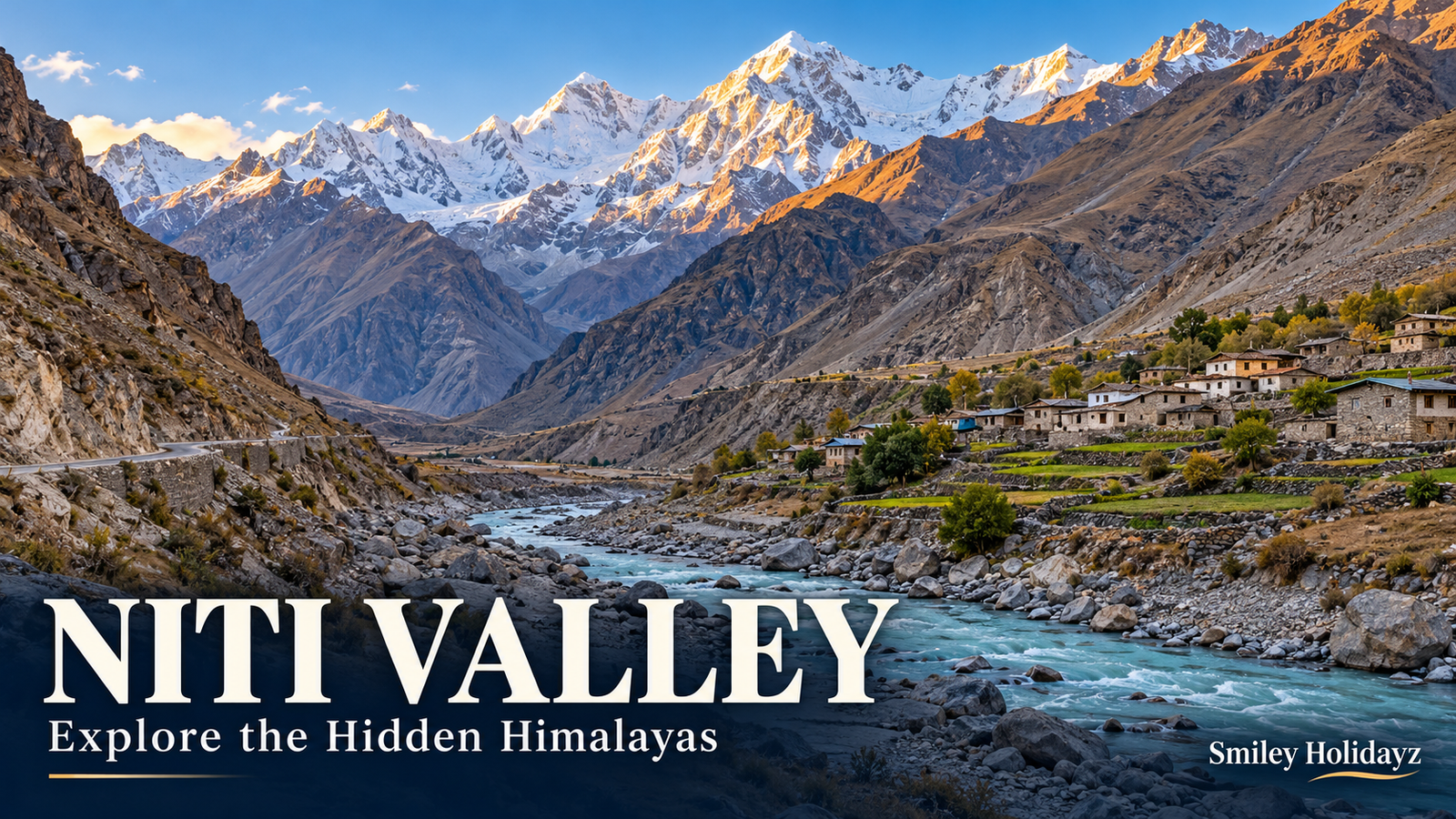
Niti Valley offers a remarkable journey into the quieter Himalayas of Uttarakhand, where mountain villages, river gorges and local traditions create an experience beyond conventional sightseeing. Located in Chamoli district, this border-region destination appeals to travellers who enjoy dramatic scenery, village walks and thoughtfully paced road trips. The journey is as memorable as the destination: rivers accompany the road, slopes change character with elevation, and small settlements reveal how communities have adapted to mountain life. For a rewarding visit, combine curiosity with practical preparation, particularly around seasonal access, accommodation and permissions.
This detailed guide covers the location, best travel periods, places to explore, route planning and a flexible itinerary. It also explains how to choose suitable transport and accommodation without confusing a scenic village excursion with permission to enter restricted frontier areas.
Where Is Niti Valley Located?
The valley lies in the Joshimath region of Chamoli, east of the Mana valley. Niti village, one of its upper settlements, is commonly placed at approximately 3,600 metres above sea level. The entire valley does not share that elevation: the approach passes through changing heights and terrain. The Dhauliganga forms a major geographical feature of this Himalayan landscape.
Joshimath is a practical base for organising the onward drive. The local community’s regional information page places the road distance to Niti village at about 87 kilometres. Treat this as an approximate distance, not a promise of journey time. Stops, roadwork, checkpoints and weather can substantially change the day’s schedule.
What Makes This Himalayan Region Special?
The appeal comes from the relationship between landscape and everyday life. Rather than rushing between crowded attractions, visitors can spend time noticing cultivated patches, mountain architecture and the contrast between river corridors and higher slopes. A village walk offers a different perspective from a photograph taken through a vehicle window.
The region is associated with Bhotiya communities, including Marchha and Tolchha groups. Seasonal movement between higher settlements and lower homes remains an important part of its cultural background. Many families return to the upper villages during warmer months and move down for winter. Consequently, the atmosphere of a settlement can change considerably across the year.
Community life should be approached with respect. Ask before entering a courtyard, photographing a resident or attending a ceremony. Buying locally made products, when available, and paying fairly for guiding or hospitality are practical ways to support the people whose home you are visiting.
Best Time to Visit Niti Valley
May–June and September–October are commonly recommended planning windows for a general sightseeing trip. These are seasonal guidelines rather than fixed opening dates. Confirm the condition of the entire approach road and the availability of your chosen accommodation before finalising transport.
Summer: May and June
Early summer is worth considering for village exploration and a road journey with longer daylight. Snow conditions in the upper region can still affect access, especially after a difficult winter. Carry warm layers even when the plains are hot, and ask your host what conditions are like at the actual destination.
Autumn: September and October
Autumn can suit travellers interested in mountain photography and cooler weather. However, early-season road damage may take time to repair after rain, while later departures can bring colder mornings and reduced village services. Check both access and accommodation rather than relying on a calendar alone.
Monsoon and Winter Considerations
Rain can disrupt the approach through landslides, falling debris and damaged roads. Winter brings snow and severe cold, with seasonal movement affecting local services. Neither period should be treated as a routine extension of a summer itinerary. Follow current administrative advice and postpone when conditions are unsuitable.
How to Reach the Valley
Travellers arriving from outside Uttarakhand can organise their mountain journey from Haridwar, Rishikesh or Dehradun. Jolly Grant Airport serves the Dehradun–Rishikesh region, while rail connections can be selected according to the actual service available for your travel date. Confirm the onward pickup point before booking a train or flight.
A usual road approach from Haridwar or Rishikesh continues through Devprayag, Srinagar, Rudraprayag, Karnaprayag and Chamoli towards Joshimath. From there, the valley route heads towards Tapovan and Malari before the upper villages. The Badrinath–Mana road is a different onward direction; do not assume that the two valleys form one continuous sightseeing circuit.
Allow a full mountain-travel day for the approach to your base, with an intermediate halt if your starting time or group needs require one. Ask about road conditions immediately before departure. A driver familiar with the route can help set a realistic turnaround time and choose safe places to stop.
Places to Explore in Niti Valley
Malari Village
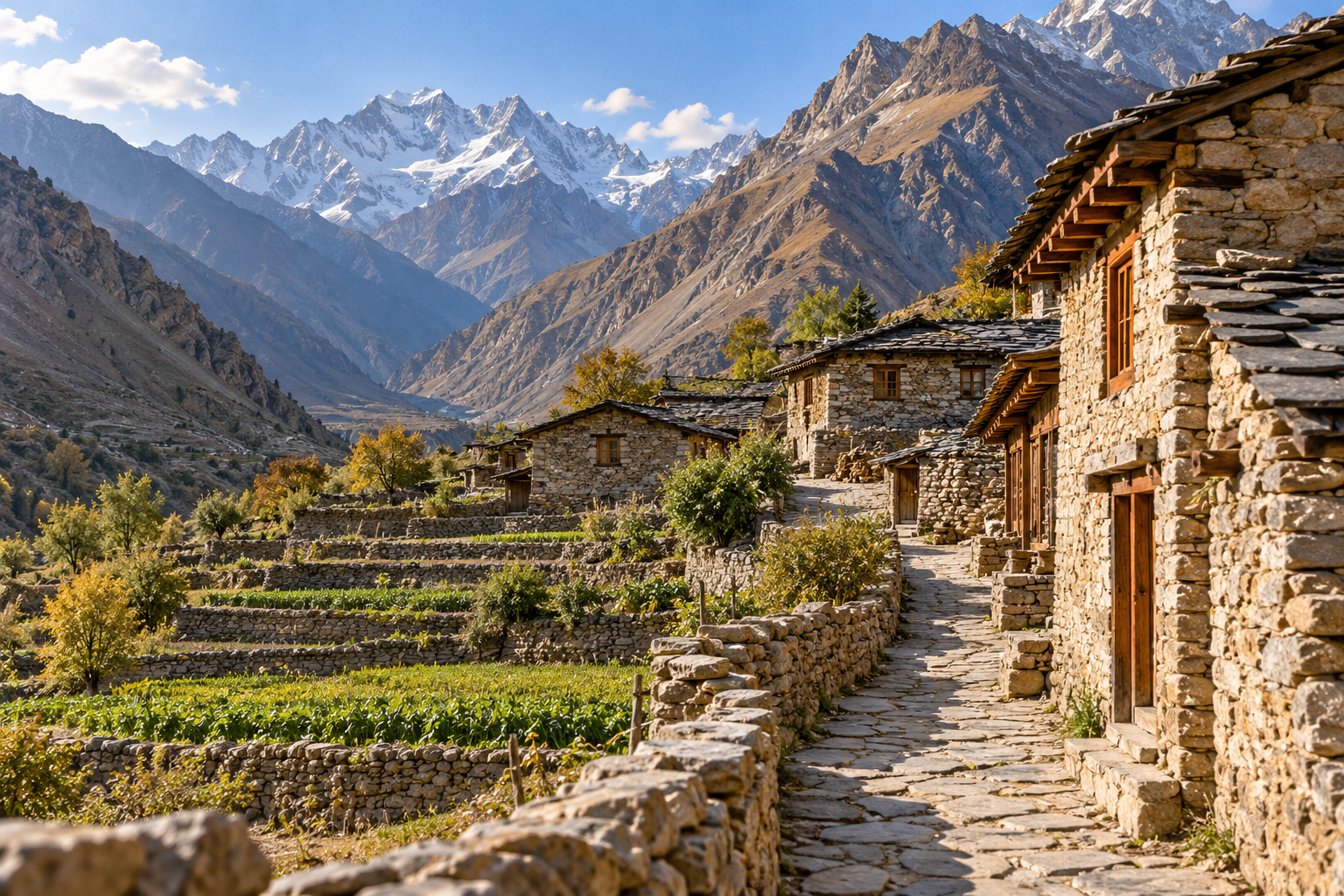
Malari is an important village stop on the upper-valley route. Its setting and traditional built environment make it worth exploring slowly, where local access allows. Walk without obstructing village lanes, ask before photographing private buildings and give residents space to continue their daily activities. A short visit can be more rewarding than a hurried roadside photo.
Bampa and Gamshali
Bampa and Gamshali provide additional opportunities to appreciate village surroundings. The community guide identifies Panchnag Temple in Bampa and Faila Temple in Gamshali among local religious places. Ask residents about visiting etiquette, appropriate clothing and photography. Temple access should follow local custom rather than assumptions based on larger pilgrimage centres.
Niti Village
The upper village is a natural focus for many road trips. Explore only where visitors are permitted and follow checkpoint instructions. Its name should not be confused with the high mountain pass farther towards the frontier. Reaching the settlement does not authorise travel beyond the approved area.
Timmersain Mahadev
Timmersain Mahadev is a cave shrine associated with Lord Shiva and a naturally occurring seasonal ice formation. Travellers sometimes encounter it described as a local counterpart to Amarnath. However, the ice formation is seasonal and should never be promised as a year-round attraction. Confirm the shrine’s access arrangements, walking conditions and current darshan information separately from a general valley excursion.
River Scenery and Village Viewpoints
The drive itself offers changing perspectives on mountain slopes and river terrain. Ask your driver to stop only where the vehicle can park safely. Stay back from unstable edges and avoid approaching fast-flowing water for photographs. Open spaces that look inviting from the road may still be private, unsafe or restricted.
Permits, Identification and Border-Area Access
Access rules need to be checked for the precise places on your itinerary. Older travel pages give differing accounts of permission requirements, and rules for a village visit may differ from those for a restricted trek or pass. Nationality and the proposed route can also affect eligibility.
The Chamoli Inner Line Permit portal provides registration and applications for restricted journeys. Its published advisory asks travellers to arrange accommodation in advance and obtain police verification from their place of residence. Confirm with the administration which documents and approvals apply to your proposed visit; registration alone is not permission to enter every border location.
- Carry original accepted identification and the copies requested for your application.
- Check the authorised route, travel dates and any conditions printed on your approval.
- Keep accommodation confirmations and the organiser’s contact details available offline.
- Follow photography restrictions and instructions at checkpoints.
- Do not enter side roads, military areas or trails beyond your authorised itinerary.
Allow time for document processing before making non-refundable commitments. Ask what happens to your booking if access is delayed or permission is not granted.
Suggested Niti Valley Itinerary from Haridwar
A five-day outline can provide a more flexible starting point than a rushed weekend. The following is a planning example, subject to road access, permissions and individual fitness. Adjust overnight stops and add time whenever the conditions require it.
Day 1: Travel Towards the Joshimath Region
Begin early from Haridwar or Rishikesh and follow the agreed mountain route. Include meal breaks and rest stops. If delays make the drive too long, use a confirmed intermediate overnight halt instead of pushing through late into the night.
Day 2: Rest and Local Preparation
Keep the day gentle, check documents and reconfirm the upper-valley arrangements. Discuss the next day’s road status, departure time and permitted stops with your driver. This pause helps manage travel fatigue, although it does not guarantee protection from altitude illness.
Day 3: Valley Excursion
Travel towards Malari and the upper villages only as access and health allow. Select a few meaningful stops rather than trying to cover every location. Return to your confirmed base within the agreed driving window. An overnight stay higher up should be separately assessed and booked.
Day 4: Flexible Local Day
Keep this day available for weather-related changes or rest. If the original excursion went smoothly, consider a separately planned local outing around Joshimath or Auli. Do not add another long journey simply because the day appears empty.
Day 5: Return Journey
Return towards Haridwar or Rishikesh with adequate breaks. Avoid a tight same-evening flight or train connection. If your itinerary begins in Delhi, allow extra transfer time rather than fitting the same programme into fewer days.
Accommodation, Food and Mobile Connectivity
Joshimath is a useful starting point for comparing accommodation. Village homestays or guesthouses may also be an option where they are operating, but availability must be confirmed directly. Ask for the property name, location, room-sharing arrangement, bathroom facilities, bedding and meal plan before paying.
A remote stay works best when expectations are clear. Ask whether hot water and electricity are available at predictable times and whether your host can accommodate dietary restrictions. Bring some familiar snacks, but avoid creating unnecessary packaging waste. Carry drinking water and ask about safe refill options.
Prepare for interruptions to phone service and charging. Download maps and documents, carry a power bank and tell someone at home about your expected return. Keep sufficient cash for agreed local expenses rather than assuming digital payments will work at every stop.
How to Plan a Niti Valley Tour Budget
The total cost depends on your pickup point, travel dates, vehicle, group size, accommodation and number of nights. A private family trip and a shared excursion will have different cost structures. Request a written quote based on your actual route instead of relying on an undated online starting price.
Check whether the quote includes driver allowance, fuel, parking, accommodation, meals and any documentation assistance. Ask about extra kilometres, additional nights, cancellation terms and costs arising from a disrupted road journey. Confirm whether a guide is included or available separately.
The best comparison is between equivalent itineraries. A cheaper package may involve longer driving days or different room occupancy. Choose a pace and service level that suit your group, and keep a contingency amount for unavoidable changes.
Altitude Awareness and Packing Essentials
The upper village’s elevation makes altitude preparation relevant even on a road trip. According to CDC travel guidance, gradual ascent is important, and people with existing medical conditions should seek advice before travelling high. Discuss the proposed route and sleeping locations with a clinician when needed.
Report headache, nausea or unusual tiredness after ascent. Do not continue higher with altitude-illness symptoms; worsening symptoms require descent and medical help. Confusion, loss of coordination or breathlessness at rest need urgent attention. Avoid strenuous activity on initial arrival and do not use medicines preventively without appropriate medical advice.
- Clothing: Warm layers, a windproof outer jacket, cap, gloves and spare socks.
- Footwear: Comfortable shoes with dependable grip for uneven village paths.
- Protection: Sunglasses, sunscreen, lip balm and weatherproof luggage covers.
- Personal supplies: Regular medicines, identification, a torch and charging equipment.
- Daily essentials: Water, snacks, tissues and a bag for carrying waste back.
Responsible Travel and Nearby Extensions
Respect homes, religious spaces and local livelihoods. Do not collect plants or disturb wildlife, and use permitted walking routes. NABARD’s regional reporting highlights local work involving agricultural produce and woollen handloom products; ask hosts about genuine local purchases if you want a useful souvenir.
Auli, Badrinath and Mana can be considered as separate extensions from the wider Joshimath region. Allocate additional days and verify their own seasonal access. Entry into protected areas or specialist trekking routes is a separate planning exercise, not an automatic inclusion with a valley road tour.
Frequently Asked Questions
Is Niti Valley suitable for families?
It can suit families comfortable with mountain driving and simpler facilities. Assess each traveller’s health, plan rest stops and avoid a schedule that depends on long uninterrupted drives.
Is the upper village accessible throughout the year?
Do not assume year-round access. Snow, rain damage, administrative restrictions and seasonal services can affect the journey. Obtain a current update shortly before departure.
Can the valley be explored without trekking?
A road-based visit can include permitted villages and short walks. Cave shrines, side trails and higher destinations may involve additional walking or separate permissions.
Is this the same destination as Mana?
No. Mana is on the Badrinath side, while this itinerary approaches the upper villages through the Malari direction. Plan separate travel time if you want to include both.
Smiley Holidayz
Your Trusted Travel Partner in Uttarakhand
Planning your Niti Valley trip, Malari village excursion, hotel stay or taxi service from Haridwar, Rishikesh or Joshimath? Our local travel team can help you plan your journey according to your travel dates, route requirements and budget. Contact us to discuss transport, accommodation and current access arrangements for your Himalayan holiday.

A Haridwar-based travel agency helping travellers plan Chardham Yatra, Uttarakhand tours, hotel bookings and helicopter packages.