📅 Haridwar Ardh Kumbh Mela 2027 Bathing Schedule
The Shahi Snan and Amrit Snan are the most anticipated events of the Haridwar Ardh Kumbh Mela. Every bathing day is selected according to traditional Hindu astrology and religious calculations, making these occasions deeply significant for millions of devotees. The Government of Uttarakhand and the competent authorities officially announce the complete bathing calendar closer to the festival. Since schedules may be revised based on administrative planning and public safety requirements, pilgrims should always verify the latest official updates before finalizing their travel plans.
📢 Official Bathing Dates
The official Shahi Snan and Amrit Snan dates for Haridwar Ardh Kumbh Mela 2027 will be updated once they are formally announced by the concerned authorities. To avoid confusion, travellers are advised not to rely on unofficial social media posts or unverified websites for important pilgrimage information.
| Bathing Event | Status |
|---|---|
| Shahi Snan | Official Schedule Awaited |
| Amrit Snan | Official Schedule Awaited |
📅 Haridwar Ardh Kumbh Mela 2027 Bathing Dates
The Haridwar Ardh Kumbh Mela 2027 is scheduled to be held from 14 January 2027 to 20 April 2027. During this sacred festival, devotees can participate in ten important bathing occasions, including the highly significant Amrit Snan days.
| Date | Festival / Occasion | Bath Type | Crowd Level |
|---|---|---|---|
| 14 January 2027 | Makar Sankranti | Holy Bath | Very High |
| 06 February 2027 | Mauni Amavasya | Holy Bath | Very High |
| 11 February 2027 | Vasant Panchami | Holy Bath | High |
| 20 February 2027 | Magh Purnima | Holy Bath | High |
| 06 March 2027 | Maha Shivratri | Amrit Snan | Extremely High |
| 08 March 2027 | Phalguna Amavasya | Amrit Snan | Extremely High |
| 07 April 2027 | Nav Samvatsar (Hindu New Year) | Holy Bath | High |
| 14 April 2027 | Mesh Sankranti | Amrit Snan | Peak Crowd |
| 15 April 2027 | Shri Ram Navami | Holy Bath | High |
| 20 April 2027 | Chaitra Purnima (Closing Day) | Closing Holy Bath | High |
Disclaimer: Pilgrims are advised to verify the latest bathing schedule with the official authorities before planning their journey, as event timings or arrangements may be updated.
🌤 Best Time to Visit During the Kumbh Mela
Every day during the Kumbh Mela offers a unique experience, but your visit should depend on what you wish to experience.
| Travel Goal | Recommended Time |
|---|---|
| Witness Grand Processions | Major Bathing Days |
| Photography | Early Morning & Sunset |
| Comfortable Temple Visits | Regular Festival Days |
| Senior Citizens | Non-Peak Days |
Smiley Holidayz
Your Trusted Travel Partner in Uttarakhand
Planning your Haridwar Ardh Kumbh Mela 2027, Char Dham Yatra, Kedarnath Trip, Hotel Booking or Taxi Service? Let our local travel experts help you with the best prices, verified hotels, and comfortable travel across Uttarakhand.
✅ Char Dham Yatra | ✅ Haridwar Hotels | ✅ Taxi Service | ✅ Uttarakhand Tour Packages
What is Shahi Snan?
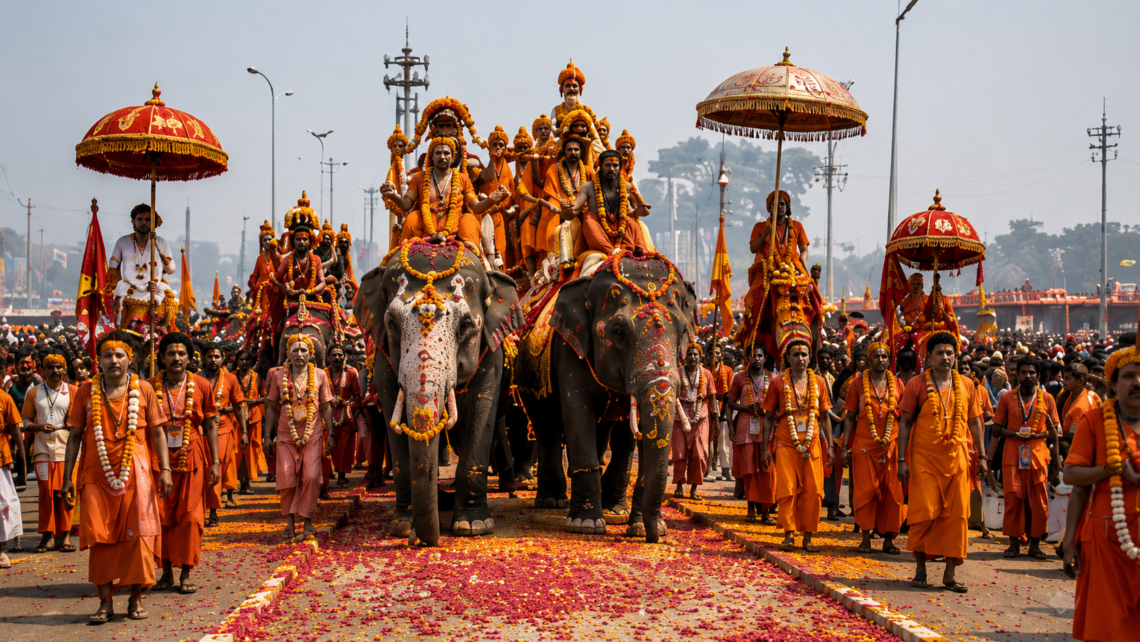
The term Shahi Snan, meaning “Royal Bath”, refers to the ceremonial procession and sacred bathing performed by the recognised Akharas during the Kumbh Mela. On these highly auspicious days, saints, ascetics, and spiritual leaders proceed towards the holy ghats in traditional processions accompanied by devotional chants, religious flags, sacred symbols, and centuries-old customs. Witnessing the Shahi Snan is considered one of the most remarkable spiritual experiences of the Kumbh Mela, offering visitors a glimpse into India’s rich religious heritage and living traditions.
What is Amrit Snan?
The concept of Amrit Snan is rooted in the ancient Hindu legend of the Samudra Manthan (Churning of the Ocean). According to mythology, during the battle over the divine nectar of immortality, drops of Amrit are believed to have fallen at four sacred locations—Haridwar, Prayagraj, Ujjain, and Nashik. These holy sites later became the locations where the Kumbh Mela is celebrated. For devotees, bathing in the River Ganga during the designated auspicious bathing days symbolises spiritual purification, faith, and devotion. While beliefs differ among individuals, the ritual continues to inspire millions of pilgrims every Kumbh.
🚆 How to Reach Haridwar
Haridwar is one of the most accessible pilgrimage destinations in North India. Whether you travel by train, flight, or road, reaching the holy city is convenient from almost every major Indian city.
✈ By Air
The nearest airport is Jolly Grant Airport, Dehradun, approximately 35 km from Haridwar. Regular flights operate from Delhi, Mumbai, Bengaluru, Hyderabad, Ahmedabad, Jaipur, and several other cities.
🚆 By Train
Haridwar Junction is connected with Delhi, Mumbai, Kolkata, Varanasi, Ahmedabad, Lucknow, Jaipur, Chandigarh, and numerous other destinations through regular railway services.
🛣 By Road
Luxury Volvo buses, state transport buses, taxis, and private vehicles operate throughout the year. Road connectivity from Delhi, Dehradun, Chandigarh, and nearby cities is excellent.
🏨 Where to Stay During Haridwar Kumbh Mela
Choosing the right accommodation is one of the most important parts of your pilgrimage. Since hotel demand rises significantly during the Kumbh period, booking your stay well in advance is highly recommended.
| Area | Best For |
|---|---|
| Har Ki Pauri | Walking distance to Ghats |
| Railway Station Area | Budget Hotels & Easy Transport |
| Rishikesh Road | Premium Hotels & Resorts |
💰 Estimated Travel Budget
Your travel budget depends on your preferred accommodation, transportation, and duration of stay. Hotel prices may increase during the Kumbh Mela due to exceptionally high demand.
| Category | Estimated Price* |
|---|---|
| Budget Hotel | ₹1,500 – ₹3,000 |
| Deluxe Hotel | ₹3,500 – ₹7,000 |
| Premium Hotel | ₹8,000+ |
*Prices are indicative and may vary depending on demand and hotel category.
🎒 Essential Packing Checklist
- Valid Government ID
- Comfortable Walking Shoes
- Personal Medicines
- Mobile Charger & Power Bank
- Reusable Water Bottle
- Light Cotton Clothing
- Small Backpack
- Rain Protection (if required)
- Cash & Digital Payment Options
💡 Local Travel Tip
If you wish to witness the spectacular Ganga Aarti at Har Ki Pauri, arrive at least one hour before the ceremony begins to secure a comfortable viewing spot. For a smoother experience during the Kumbh period, prefer walking within the main pilgrimage zone, as traffic diversions and temporary vehicle restrictions are common around major bathing days.
Why is Har Ki Pauri the Main Bathing Ghat?
Har Ki Pauri is the spiritual heart of Haridwar and one of the most revered ghats in India. It is believed to be the place where the sacred River Ganga enters the plains after descending from the Himalayas, making it one of the holiest locations for Hindu pilgrims. Throughout the year, thousands of devotees visit Har Ki Pauri to perform prayers, attend the famous evening Ganga Aarti, and take a holy dip in the river. During the Kumbh Mela, however, this sacred ghat becomes the focal point of one of the world’s largest religious gatherings. The spiritual atmosphere created by millions of pilgrims, chanting priests, devotional music, and centuries-old rituals makes Har Ki Pauri an unforgettable destination for every visitor.
🙏 Why Do Millions of Devotees Take the Holy Dip?
For Hindus, the sacred bath during the Kumbh Mela represents far more than entering the waters of the Ganga. It is an act of devotion, humility, gratitude, and spiritual renewal. Many pilgrims believe that bathing on the auspicious Shahi Snan or Amrit Snan days allows them to express their faith while participating in a tradition that has continued for centuries. Regardless of individual beliefs, the Kumbh Mela inspires people from different regions, languages, and cultures to gather peacefully in a shared spiritual experience. It is this sense of unity and devotion that makes the Kumbh Mela truly unique.
🏛 Who Participates in the Shahi Snan?
One of the highlights of the Kumbh Mela is the ceremonial procession of the traditional Akharas. These ancient monastic institutions have preserved India’s spiritual traditions for hundreds of years. On the designated Shahi Snan days, saints and ascetics from different Akharas proceed towards the bathing ghats in grand processions accompanied by religious flags, traditional music, chanting, and ceremonial rituals. These processions are among the most photographed and admired moments of the Kumbh Mela, attracting visitors from across the world.
✨ What Makes the Bathing Days So Special?
The bathing days are considered the most spiritually significant moments of the Kumbh Mela because they combine faith, tradition, devotion, and cultural heritage on an extraordinary scale. Visitors can witness:
- ✔ Grand processions of saints and Akharas.
- ✔ Devotional chanting and traditional rituals.
- ✔ The spiritual atmosphere of Har Ki Pauri.
- ✔ Thousands of temples and ashrams welcoming pilgrims.
- ✔ Evening Ganga Aarti illuminated with countless lamps.
- ✔ A peaceful gathering of people from across India and around the world.
For photographers, researchers, cultural travellers, and pilgrims alike, these moments offer an extraordinary opportunity to witness one of humanity’s oldest living traditions.
🌍 A Festival Beyond Religion
Although the Kumbh Mela is deeply rooted in Hindu traditions, it is also recognised internationally as one of the world’s greatest cultural gatherings. Every Kumbh welcomes travellers, journalists, historians, photographers, researchers, and spiritual seekers who come to experience India’s rich heritage and unique traditions. The event beautifully reflects values such as peace, unity, hospitality, and respect for diverse cultures. Whether you visit as a pilgrim or as a traveller interested in history and culture, the Haridwar Kumbh Mela offers an unforgettable experience unlike anywhere else in the world.