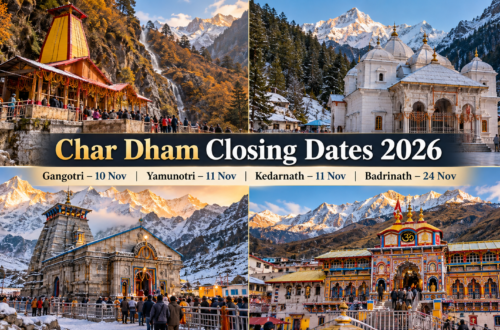
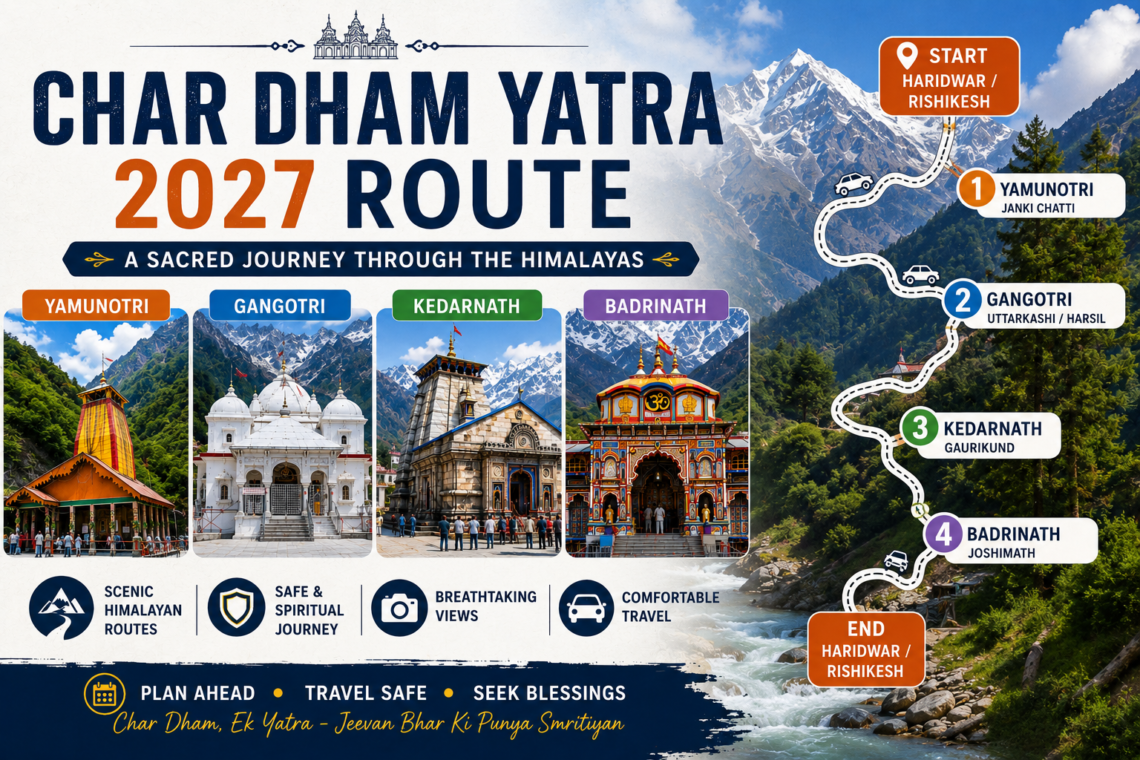
Char Dham Yatra 2027 Route follows one of the most sacred pilgrimage journeys through the Garhwal Himalayas of Uttarakhand. The traditional sequence begins with Yamunotri Dham, continues to Gangotri Dham, then moves towards Kedarnath Dham and finally reaches Badrinath Dham. This west-to-east order is traditionally followed by pilgrims and is also a practical way to plan a complete road journey through the Himalayan region.
A Char Dham pilgrimage is not simply a road trip between four temples. It combines long mountain drives, high-altitude destinations, short and long walks, river valleys, forested landscapes and deeply spiritual experiences. For travellers planning their journey in 2027, understanding the route in advance can make the entire trip more comfortable and organised.
Uttarakhand Tourism describes the traditional Char Dham sequence as Yamunotri → Gangotri → Kedarnath → Badrinath. The official tourism information also notes that the shrines generally remain closed during the winter months and reopen during the warmer pilgrimage season.
Understanding the Char Dham Yatra Route
The four shrines are located in different parts of the Garhwal Himalayas, so the journey covers a large area. Yamunotri and Gangotri are located in Uttarkashi district, Kedarnath is in Rudraprayag district and Badrinath is in Chamoli district.
Unlike a normal sightseeing holiday, this pilgrimage requires travellers to keep sufficient time for mountain roads, weather conditions, temple darshan, rest and walking sections. The route can be completed by road, while helicopter services are available for certain sections and specialised pilgrimage packages.
For a road-based pilgrimage starting from Haridwar, the journey generally moves through Rishikesh, Barkot and Janki Chatti before reaching Yamunotri. After completing Yamunotri, pilgrims travel towards Uttarkashi and Gangotri. The route then crosses towards the Kedarnath region through places such as Tehri, Srinagar and Rudraprayag, depending on the itinerary and current road conditions.
After Kedarnath, the journey continues towards Badrinath through the Alaknanda valley. Joshimath is an important stop on this section. After darshan at Badrinath, travellers generally return towards Haridwar or Rishikesh through the mountain route.
Char Dham Yatra 2027 Route Map in Simple Order
- Starting Point: Haridwar or Rishikesh
- First Dham: Yamunotri
- Second Dham: Gangotri
- Third Dham: Kedarnath
- Fourth Dham: Badrinath
- Return: Badrinath → Joshimath → Rudraprayag/Srinagar → Rishikesh/Haridwar
There can be variations in overnight halts depending on the package, vehicle, weather, road conditions and the number of days available. A private taxi itinerary may use different stay locations compared with a fixed group departure.
1. Haridwar to Yamunotri
Haridwar is one of the most popular starting points for a Char Dham pilgrimage. Many travellers arrive one day before the main journey so they can rest, complete necessary preparations and begin the mountain drive early the next morning.
From Haridwar, the route generally moves towards Rishikesh and then into the Garhwal Himalayas. Important places on the way can include Narendra Nagar, Chamba, Tehri, Dharasu Bend and Barkot, depending on the route being used.
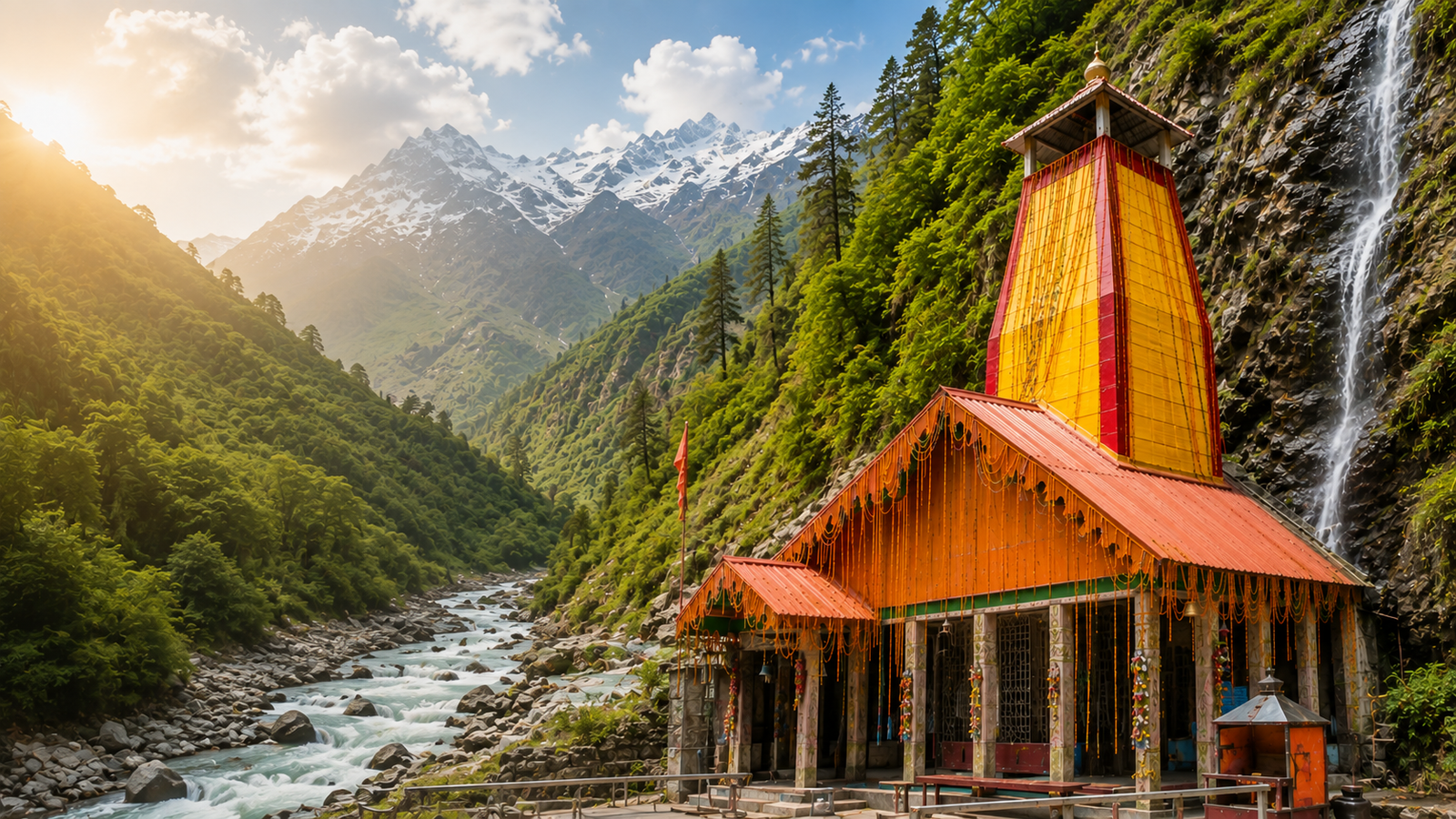
Barkot is one of the most common overnight bases for the Yamunotri sector. From Barkot, pilgrims continue towards Janki Chatti. The motorable road reaches Janki Chatti, after which the final approach to Yamunotri involves a walking section.
According to Uttarakhand Tourism, Yamunotri is situated at approximately 3,233 metres above sea level and the route from Janki Chatti involves a steep trek of roughly 3 km according to its current destination information. Pilgrims may also use ponies or palanquins where available and permitted.
Important Stops on the Yamunotri Section
- Haridwar
- Rishikesh
- Tehri region
- Dharasu Bend
- Barkot
- Janki Chatti
- Yamunotri Temple
Because the final section is physically demanding, travellers should avoid rushing. Start early, keep water and basic medicines available, and take regular breaks during the trek.
2. Yamunotri to Gangotri
After completing Yamunotri darshan, pilgrims generally return to Janki Chatti and continue towards Barkot and Uttarkashi. Depending on the itinerary, travellers may stay overnight in Barkot, Uttarkashi or Harsil.
Uttarkashi is an important town on the Gangotri route and is often used as a base for travellers. Harsil is another popular overnight destination because of its scenic Himalayan setting and convenient location on the way to Gangotri.
The drive from Harsil towards Gangotri passes through beautiful mountain scenery. Gangotri Dham is located on the banks of the Bhagirathi River and is dedicated to Goddess Ganga.
Uttarakhand Tourism states that Gangotri is the second stop in the traditional Char Dham sequence, following Yamunotri. The road to Gangotri is motorable, unlike the final trekking section required for Yamunotri.
3. Gangotri to Kedarnath
After Gangotri, the journey changes direction towards the Kedarnath region. This is one of the longer road sections of the pilgrimage, so proper itinerary planning is important.
Travellers may move from Gangotri towards Uttarkashi and then continue through the Tehri region towards Srinagar and Rudraprayag. From Rudraprayag, the route continues towards Guptkashi, Phata, Sitapur or Sonprayag depending on the accommodation and transportation plan.
For many travellers, Guptkashi or nearby locations are preferred as overnight bases before the Kedarnath journey. Staying close to the Kedarnath access route allows pilgrims to begin the next day’s journey early.
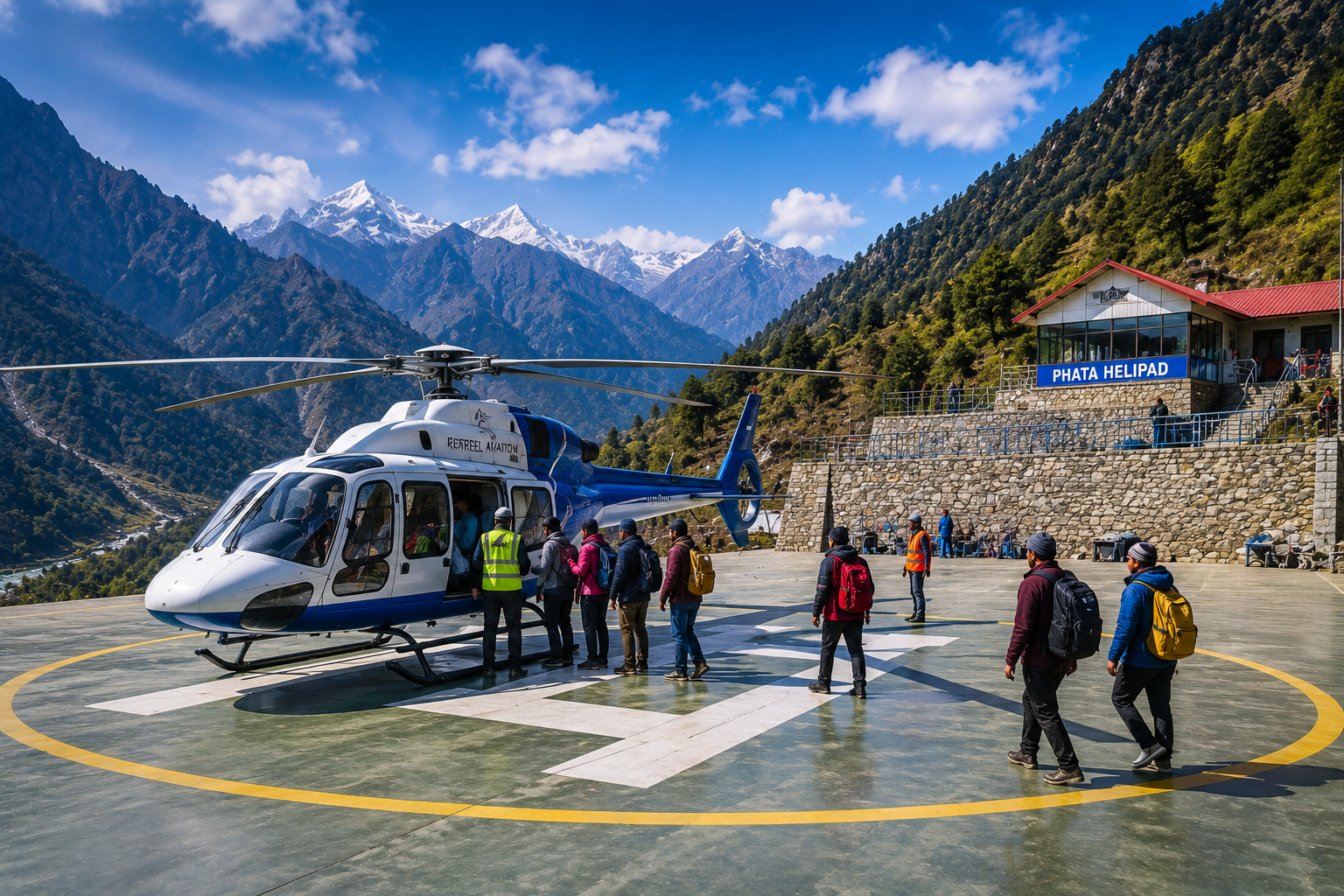
The Kedarnath sector is different from the other three Dhams because the final approach requires a significant mountain trek unless the pilgrim uses an approved helicopter service or other permitted options.
4. Kedarnath Route: Sonprayag to Gaurikund and Kedarnath
Kedarnath is one of the most important Shiva pilgrimage destinations in India. The road journey does not go directly to the temple. Vehicles generally travel towards the designated road-access points, after which pilgrims continue towards Kedarnath on foot or through permitted travel options.
Gaurikund has traditionally been an important starting point for the Kedarnath trek. The exact trekking distance and route conditions can change due to infrastructure work, weather, safety measures and route management, so travellers should follow the latest official instructions before beginning the trek.
The Kedarnath journey requires considerably more physical effort than a normal temple visit. Travellers should maintain a comfortable pace rather than trying to complete the climb too quickly.
Uttarakhand Tourism’s Char Dham package information also describes the Kedarnath section as a road journey towards Gaurikund followed by a trek to Kedarnath.
5. Kedarnath to Badrinath
Once Kedarnath darshan is complete, pilgrims return towards the road-access area and continue towards the Badrinath region. Depending on the itinerary, overnight stays may be planned around Guptkashi, Rudraprayag, Tilwara, Karnaprayag or nearby destinations.
The road gradually follows the Alaknanda valley towards Joshimath and Badrinath. This section offers some of the most dramatic mountain landscapes of the entire journey.
Joshimath is an important transit point before Badrinath. From Joshimath, travellers continue towards Govindghat and Badrinath. The final approach leads into the high-altitude Badrinath valley.
Badrinath is situated at approximately 3,100 metres above sea level on the banks of the Alaknanda River, between the Nar and Narayana mountain ranges. The Badrinath Temple is dedicated to Lord Vishnu and is one of the four major Char Dham shrines of Uttarakhand.
6. Badrinath to Haridwar
After completing Badrinath darshan, the pilgrimage generally begins its return journey. Travellers may visit Mana village if it is open and accessible under the current regulations and then proceed towards Joshimath.
From Joshimath, the route continues through the Alaknanda valley towards Karnaprayag, Rudraprayag and Srinagar before reaching Rishikesh or Haridwar.
The return journey can be long, so travellers should not schedule important onward flights or trains immediately after reaching Haridwar. Keeping some buffer time is especially useful during the monsoon or periods of heavy pilgrimage traffic.
Suggested 10-Day Route for 2027
A 10-day itinerary is commonly used for a road-based Char Dham pilgrimage from Haridwar. The exact route and overnight locations can be modified according to the traveller’s requirements.
| Day | Route | Suggested Stay |
|---|---|---|
| Day 1 | Haridwar → Barkot | Barkot |
| Day 2 | Barkot → Janki Chatti → Yamunotri → Barkot | Barkot |
| Day 3 | Barkot → Uttarkashi/Harsil | Uttarkashi/Harsil |
| Day 4 | Uttarkashi/Harsil → Gangotri → Uttarkashi | Uttarkashi |
| Day 5 | Uttarkashi → Guptkashi/Sitapur | Guptkashi/Sitapur |
| Day 6 | Guptkashi/Sitapur → Sonprayag/Gaurikund → Kedarnath | Kedarnath |
| Day 7 | Kedarnath → Gaurikund/Sonprayag → Guptkashi | Guptkashi/Sitapur |
| Day 8 | Guptkashi → Rudraprayag → Joshimath → Badrinath | Badrinath |
| Day 9 | Badrinath Darshan → Joshimath/Rudraprayag | Rudraprayag |
| Day 10 | Rudraprayag → Rishikesh → Haridwar | Journey ends |
This is a planning example rather than a fixed government schedule. Actual driving times and overnight halts can change according to road conditions, weather, traffic restrictions, temple arrangements and local administration instructions.
How Much Distance Does the Char Dham Route Cover?
The total road distance depends heavily on the starting point, return route, hotel locations and diversions. A Haridwar-based package can cover well over 1,000 kilometres by road, while some longer itineraries may cover considerably more.
Uttarakhand Tourism lists a traditional Haridwar-based package covering Haridwar, Yamunotri, Gangotri, Kedarnath and Badrinath over approximately 10 days and 10 nights. Its published itinerary also demonstrates how the route is divided into separate road and trekking sections.
Instead of focusing only on the total kilometres, travellers should consider the actual mountain driving time. A relatively short distance in the Himalayas can take considerably longer than the same distance on a highway because of winding roads, traffic, weather and road conditions.
Best Starting Point for Char Dham Yatra 2027
Haridwar and Rishikesh are two of the most convenient starting points for a complete road-based pilgrimage. Both have good connectivity with Delhi and other major cities.
Haridwar is especially convenient for travellers who want to begin with a spiritual stay at Har Ki Pauri and then proceed towards the Himalayan route.
Rishikesh can be convenient for travellers arriving by road or air through Dehradun and Jolly Grant Airport. It is also a popular base for Uttarakhand tour packages.
Travellers coming from other cities can also customise their journey from Delhi, Dehradun, Chandigarh, Ahmedabad, Mumbai, Pune, Hyderabad, Bengaluru, Kolkata or other locations by arranging transport to the starting point.
Smiley Holidayz
Your Trusted Travel Partner in Uttarakhand
Planning your Char Dham Yatra, Kedarnath Yatra, Badrinath Yatra, hotel stay or taxi service? Our local travel team can help you plan your journey according to your travel dates, route requirements and budget.
Important Travel Tips for the 2027 Route
1. Keep Buffer Time
Do not plan the pilgrimage with extremely tight schedules. Himalayan weather can change quickly, and road journeys can take longer than expected.
2. Start Mountain Journeys Early
Early departures are generally more comfortable because travellers can cover important road sections during daylight and keep additional time for unexpected delays.
3. Check Road Conditions Before Departure
Road conditions can change because of rainfall, landslides, falling stones, maintenance work or traffic management. Always check the latest local administration and official travel advisories before leaving your hotel.
4. Prepare for High Altitude
Yamunotri, Kedarnath and Badrinath are high-altitude destinations. Travellers should avoid overexertion and allow their bodies time to adjust. People with existing medical concerns should consult their doctor before undertaking a demanding pilgrimage.
5. Carry Appropriate Clothing
Even during the summer pilgrimage season, mornings and evenings can be cold at higher elevations. Carry warm layers, comfortable walking shoes, rain protection and basic personal medicines.
6. Keep Identification Documents Safe
Carry a valid identity document and any required registration documents throughout the journey. Registration and verification requirements can change, so travellers should check the official Uttarakhand portal before starting the pilgrimage.
Is Registration Required for Char Dham Yatra?
Yes, pilgrims should complete the required Char Dham registration formalities before starting their journey. The official Uttarakhand tourism system provides online registration facilities for the pilgrimage.
Travellers should use the official Tourist Care Uttarakhand portal for registration and follow the instructions provided for pilgrim details, journey dates, Dhams and other required information.
Registration requirements are important because the pilgrimage takes place in a sensitive Himalayan environment where authorities need to manage pilgrim movement, safety and crowd levels.
Why Route Planning Matters
Good route planning can make a major difference to the pilgrimage experience. A poorly planned itinerary may result in unnecessarily long drives, insufficient rest, rushed temple visits and difficulty managing the Kedarnath trek.
A properly planned package normally balances driving distance with overnight stays. It also allows enough time for Yamunotri and Kedarnath, where walking is an important part of the journey.
The traditional sequence is useful because it provides a logical flow through the Garhwal region: Yamunotri first, Gangotri second, Kedarnath third and Badrinath last. Uttarakhand Tourism itself identifies this sequence as the traditional clockwise pilgrimage route.
Char Dham Yatra 2027 Route: Private Taxi vs Group Package
Travellers planning a complete pilgrimage can choose between a private vehicle and a group package. Both options have advantages.
A private taxi package offers greater flexibility. Families can decide their preferred hotel category, vehicle type, meal preferences and travel pace. It can be particularly useful for families, senior citizens or groups who want a more personalised itinerary.
A group package can be more economical because transportation and other services are shared. It may suit travellers who are comfortable following a fixed itinerary and group schedule.
The best option depends on the number of travellers, budget, preferred accommodation, physical comfort and desired flexibility.
Frequently Asked Questions
What is the traditional Char Dham route in Uttarakhand?
The traditional route is Yamunotri → Gangotri → Kedarnath → Badrinath. The pilgrimage traditionally moves from west to east through the Garhwal Himalayas.
Where should I start the Char Dham Yatra?
Haridwar and Rishikesh are two of the most popular starting points for a road-based Char Dham pilgrimage. The starting point can also be customised according to the traveller’s arrival city.
Which Dham comes first?
Yamunotri is traditionally the first Dham in the Uttarakhand Char Dham pilgrimage.
Which Dham comes after Yamunotri?
Gangotri is the second Dham after Yamunotri in the traditional pilgrimage sequence.
Is Kedarnath before Badrinath?
Yes. In the traditional sequence, Kedarnath comes after Gangotri and before Badrinath.
How many days are required for Char Dham Yatra?
A complete road-based pilgrimage from Haridwar commonly takes around 9–12 days depending on the itinerary. Travellers should keep additional buffer time when possible.
Is there trekking in the Char Dham Yatra?
Yes. Yamunotri and Kedarnath involve significant walking sections. The exact route and trekking distance can vary according to current arrangements and route conditions.
Can Char Dham Yatra be completed by helicopter?
Helicopter services are available for certain pilgrimage sectors and specialised Char Dham helicopter packages. Availability, operating dates, weather conditions and booking procedures should be checked before travel.
Should I book hotels in advance?
Yes. Advance hotel and transportation planning is recommended during the peak pilgrimage season because accommodation demand can become very high.