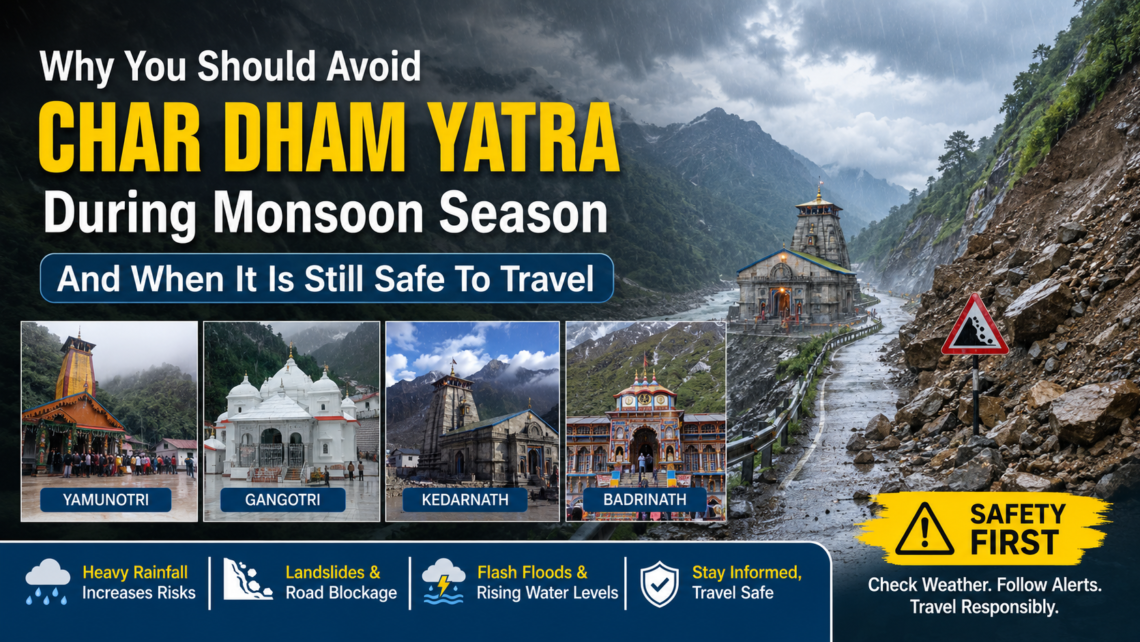
Why You Should Avoid the Char Dham Yatra During the Monsoon Season
Understand the real risks of travelling during heavy rainfall—and discover when the journey can still be safe if weather conditions remain favourable.
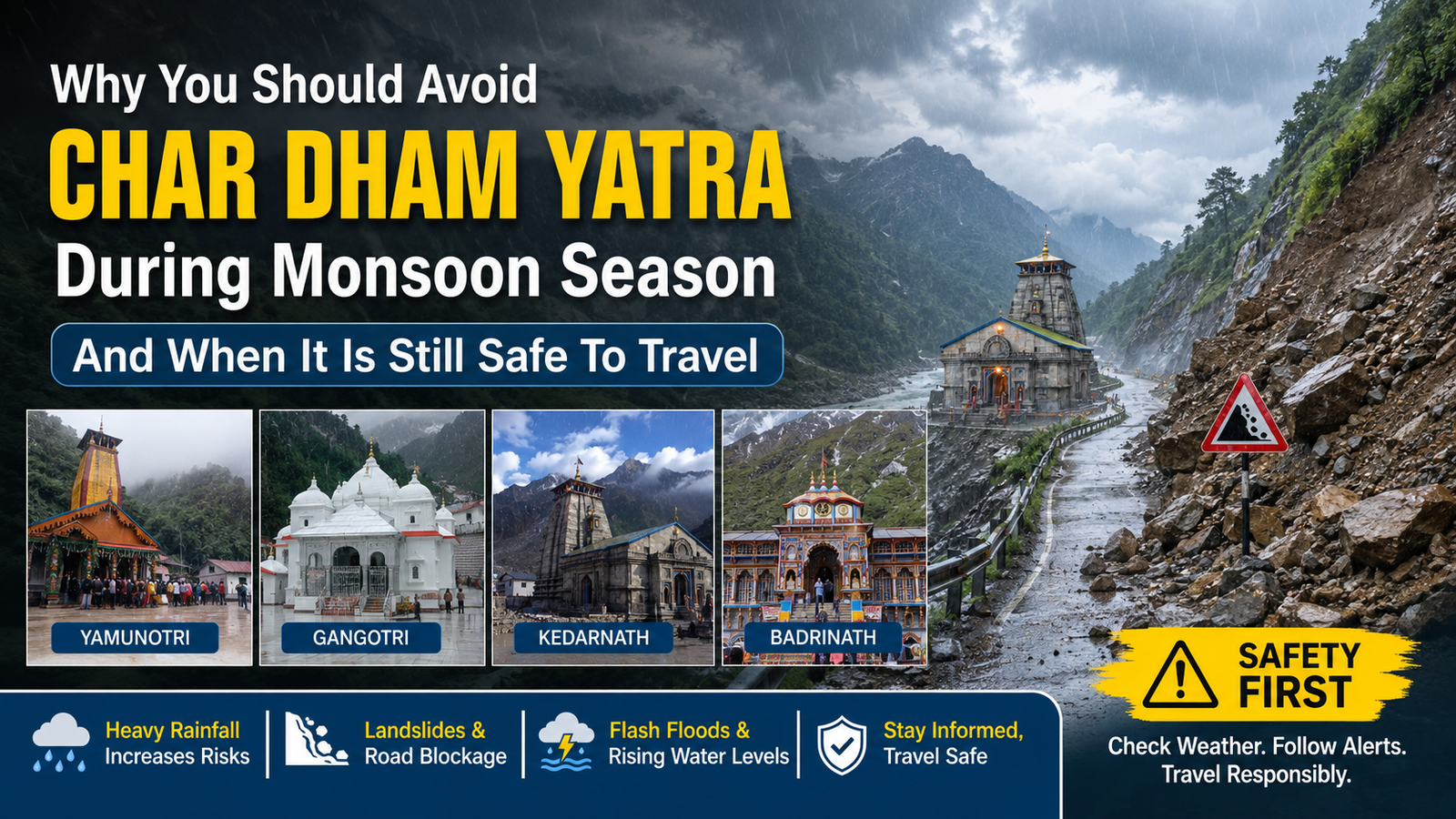
📌 Quick Highlights
- Heavy rainfall significantly increases travel risks in the Himalayas.
- Not every rainy day is dangerous—weather intensity matters.
- Road closures and landslides are the biggest concerns during monsoon.
- Always check official weather forecasts before starting your journey.
- Travel only when road conditions and government advisories are favourable.
Introduction
The Char Dham Yatra is one of India’s most sacred pilgrimages, attracting millions of devotees every year to the holy shrines of Yamunotri, Gangotri, Kedarnath, and Badrinath. Surrounded by the majestic Himalayas, the journey offers breathtaking landscapes, spiritual peace, and unforgettable experiences. However, many travellers hesitate when planning the pilgrimage during the monsoon season. One common question is: “Is it safe to visit the Char Dham during the rainy season?” The internet often gives a simple answer: “Never travel during the monsoon.” But the reality is much more balanced than that. The Char Dham Yatra is not automatically unsafe just because it is raining. The actual risk depends on several important factors such as rainfall intensity, road conditions, weather forecasts, and official government advisories. This guide explains everything you should know before making your travel decision.
⚠️ Important Travel Advice
If the India Meteorological Department (IMD) issues an Orange Alert or Red Alert, or if local authorities advise travellers to postpone their journey, it is always best to delay your trip until conditions improve. Your safety should always be your highest priority.
Why Is the Char Dham Yatra Riskier During the Monsoon?
Unlike ordinary highways, the Char Dham routes pass through steep Himalayan terrain where roads are carved into mountainsides. During continuous rainfall, the soil absorbs large amounts of water and gradually becomes unstable. As a result, loose rocks, mud, and even large boulders may slide onto the roads. Although government agencies work continuously to maintain the highways, natural conditions can sometimes create temporary travel disruptions. This is the primary reason why extra caution is required during the monsoon season.
🏔️ Landslides
Continuous rainfall can loosen mountain slopes, causing rocks and debris to fall onto roads. In some cases, traffic may remain halted until authorities clear the affected area.
🚧 Temporary Road Closures
Heavy rain can block important routes leading to the Char Dham temples. Some road closures last only a few hours, while others may take longer depending on weather conditions.
🌊 Rising River Levels
Major Himalayan rivers such as the Alaknanda, Mandakini, Bhagirathi, and Yamuna rise quickly during heavy rainfall. Authorities may temporarily restrict movement in vulnerable areas to ensure traveller safety.
💡 Myth vs Reality
| Myth | Reality |
|---|---|
| The Char Dham Yatra completely stops during the monsoon. | Not always. Travel depends on daily weather conditions and official advisories. |
| Even light rain makes the journey unsafe. | Light rainfall is common in the mountains. Continuous heavy rainfall is the main concern. |
| July and August are completely impossible for travel. | Travel is possible during favourable weather, but requires careful planning and continuous weather monitoring. |
👨💼 Expert Insight
Experienced tour operators never make travel decisions based solely on the calendar. Instead, they monitor live weather forecasts, road conditions, government advisories, and local updates before every departure. A well-planned itinerary can significantly improve both safety and the overall travel experience.
Can You Travel During the Monsoon If Rainfall Is Light?
The simple answer is Yes—but only under the right conditions. One of the biggest misconceptions about the Char Dham Yatra is that the entire monsoon season is equally dangerous. In reality, mountain weather changes very quickly. Some days experience only light showers with clear skies, while other days may receive continuous heavy rainfall that affects road safety. This is why experienced travellers and tour operators never make travel decisions based only on the month. Instead, they evaluate the actual weather conditions before and during the journey.
If rainfall is light, roads are open, and there are no weather warnings issued by local authorities, the Char Dham Yatra can often continue safely. However, travellers should always remain flexible because weather conditions in the Himalayas can change within a few hours.
✅ When the Journey Can Be Considered Safer
- Only light or occasional rainfall is expected.
- No Orange or Red Alert has been issued by IMD.
- All Char Dham routes are officially open.
- There are no reports of major landslides.
- Your hotel and transport provider confirm normal operations.
- You are physically fit and prepared for mountain travel.
❌ When You Should Postpone Your Journey
- Continuous heavy rainfall is forecast for several days.
- IMD has issued an Orange or Red Weather Alert.
- Road closures have been reported on your travel route.
- Flash flood warnings are active.
- Local administration advises travellers to avoid unnecessary movement.
- Your tour operator recommends delaying departure.
Why Weather Changes So Quickly in the Himalayas
Unlike cities where weather usually remains stable throughout the day, Himalayan regions are influenced by altitude, mountain winds, valleys, and rapidly moving clouds. You may start your morning under bright sunshine and encounter rainfall only an hour later after crossing another mountain range. Similarly, heavy rainfall in one valley does not necessarily mean every Char Dham destination is receiving the same weather. This is exactly why travellers should monitor weather forecasts every day instead of relying on predictions made a week earlier.
🌦 Weather Risk Guide
| Weather Condition | Travel Risk | Recommendation |
|---|---|---|
| Sunny or Cloudy | 🟢 Low | Safe to continue with normal precautions. |
| Light Rain | 🟡 Moderate | Travel carefully and monitor updates regularly. |
| Heavy Continuous Rain | 🟠 High | Avoid unnecessary travel until conditions improve. |
| Orange / Red Alert | 🔴 Very High | Postpone the journey and follow official advisories. |
How to Check Weather Before Starting the Char Dham Yatra
Checking the weather forecast should become part of your travel routine during the monsoon season. Do not rely only on random social media posts or forwarded WhatsApp messages. Always verify weather information from trusted and official sources.
🌦 IMD Weather Forecast
Check the India Meteorological Department forecast before departure and every morning during your journey.
🛣 Road Status
Stay updated about road conditions through local authorities or your tour operator before leaving each destination.
📱 Local Updates
Hotel managers, local drivers, and experienced tour operators usually receive road updates much earlier than visitors.
Essential Packing Checklist for Monsoon Travel
Packing correctly is one of the easiest ways to make your journey safer and more comfortable. Mountain weather changes rapidly, so carrying the right equipment can prevent unnecessary problems during the trip.
🎒 Must-Carry Essentials
✅ Rain Poncho
✅ Quick-Dry Clothing
✅ Warm Layers
✅ Extra Socks
✅ Torch / Headlamp
✅ Power Bank
✅ Basic First Aid Kit
✅ Water Bottle
✅ Important Documents
💡 Expert Travel Tip
Always keep one extra day in your itinerary during the monsoon season. Unexpected road delays are possible due to weather conditions, and having a buffer day helps avoid unnecessary stress or missed flights and train connections. Flexible travel plans are often the safest travel plans in the Himalayas.
Choose an Experienced Tour Operator
A reliable tour operator does much more than arrange hotels and transportation. Experienced operators continuously monitor weather updates, communicate with local authorities, coordinate with drivers, and make itinerary adjustments whenever required. This proactive approach helps travellers avoid unnecessary risks while ensuring a smoother and more enjoyable pilgrimage. When travelling during the monsoon, choosing an experienced travel company can make a significant difference to your overall safety and comfort.
Common Mistakes to Avoid During the Monsoon Char Dham Yatra
Even experienced travellers sometimes underestimate the challenges of travelling in the Himalayas during the rainy season. Avoiding a few common mistakes can make your pilgrimage much safer and more enjoyable.
❌ Ignoring Weather Alerts
Never ignore Orange or Red weather alerts. These warnings are issued for your safety and should always be taken seriously.
❌ Driving at Night
Night driving in mountainous regions becomes more challenging during rain because of reduced visibility, slippery roads, and possible landslides.
❌ Rushing the Journey
Trying to complete the pilgrimage too quickly often leads to fatigue and unsafe travel decisions. Always keep a relaxed schedule.
❌ Ignoring Health Issues
If you experience dizziness, breathing difficulty, fever, or extreme exhaustion, inform your travel companions immediately and seek medical assistance.
Travel Tips for Senior Citizens & Families
The Char Dham Yatra can be completed safely by senior citizens and families when proper planning is followed. However, monsoon travel requires additional care.
- ✔ Consult your doctor before travelling if you have heart, respiratory, or blood pressure conditions.
- ✔ Carry all regular medicines in waterproof bags.
- ✔ Avoid walking on wet and slippery pathways.
- ✔ Stay hydrated even in cool weather.
- ✔ Wear comfortable waterproof trekking shoes with good grip.
- ✔ Follow the instructions of local authorities and your tour manager.
Final Verdict – Should You Visit Char Dham During the Monsoon?
The answer depends entirely on the weather—not on the season alone. Many people assume that travelling during the monsoon is always unsafe, but that is not entirely true. If the region is experiencing continuous heavy rainfall, landslide warnings, road closures, or official travel advisories, postponing your journey is the safest decision. However, if rainfall is light, roads remain open, weather forecasts are favourable, and authorities have not issued any restrictions, many pilgrims successfully complete the Char Dham Yatra every year. The key is responsible planning rather than taking unnecessary risks.
Always monitor live weather forecasts, stay flexible with your itinerary, and travel with experienced professionals who understand Himalayan conditions. Remember, the purpose of the Char Dham Yatra is not only to reach the temples but also to complete the pilgrimage safely and peacefully.
Plan Your Char Dham Yatra with Confidence
At Smiley Holidayz, we believe that every pilgrimage should be safe, comfortable, and well-organized. Our experienced team closely monitors weather conditions, road updates, and travel advisories to help guests enjoy a smooth and worry-free Char Dham Yatra. Whether you’re travelling with family, senior citizens, or a private group, we assist you in planning the journey with reliable transportation, carefully selected accommodations, and expert local support.
Frequently Asked Questions (FAQs)
1. Is the Char Dham Yatra completely closed during the monsoon?
No. The pilgrimage usually continues unless heavy rainfall, landslides, or government advisories require temporary restrictions.
2. Is light rain dangerous for the Char Dham Yatra?
Light rain is common in the Himalayas and does not automatically make the journey unsafe. Always check the latest weather forecast and road conditions before travelling.
3. Which months receive the highest rainfall?
July and August generally receive the highest rainfall in Uttarakhand, although weather conditions can vary from year to year.
4. Should I postpone my trip if an Orange or Red Alert is issued?
Yes. Following official weather advisories is the safest choice during severe weather conditions.
5. How can I make my monsoon trip safer?
Travel with an experienced tour operator, monitor weather updates daily, keep your itinerary flexible, carry waterproof essentials, and avoid unnecessary travel during heavy rainfall.